
Last updated October 15, 2026
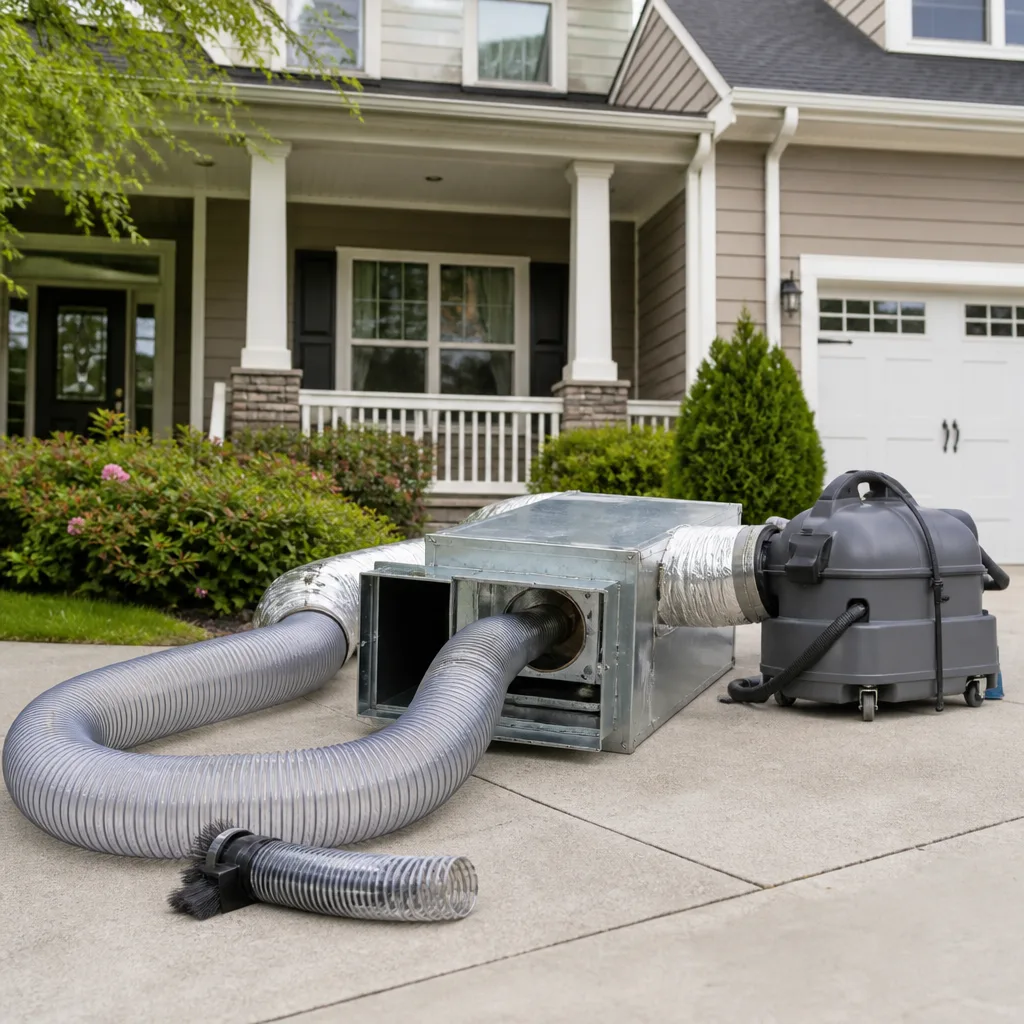 Whole-home duct cleaning
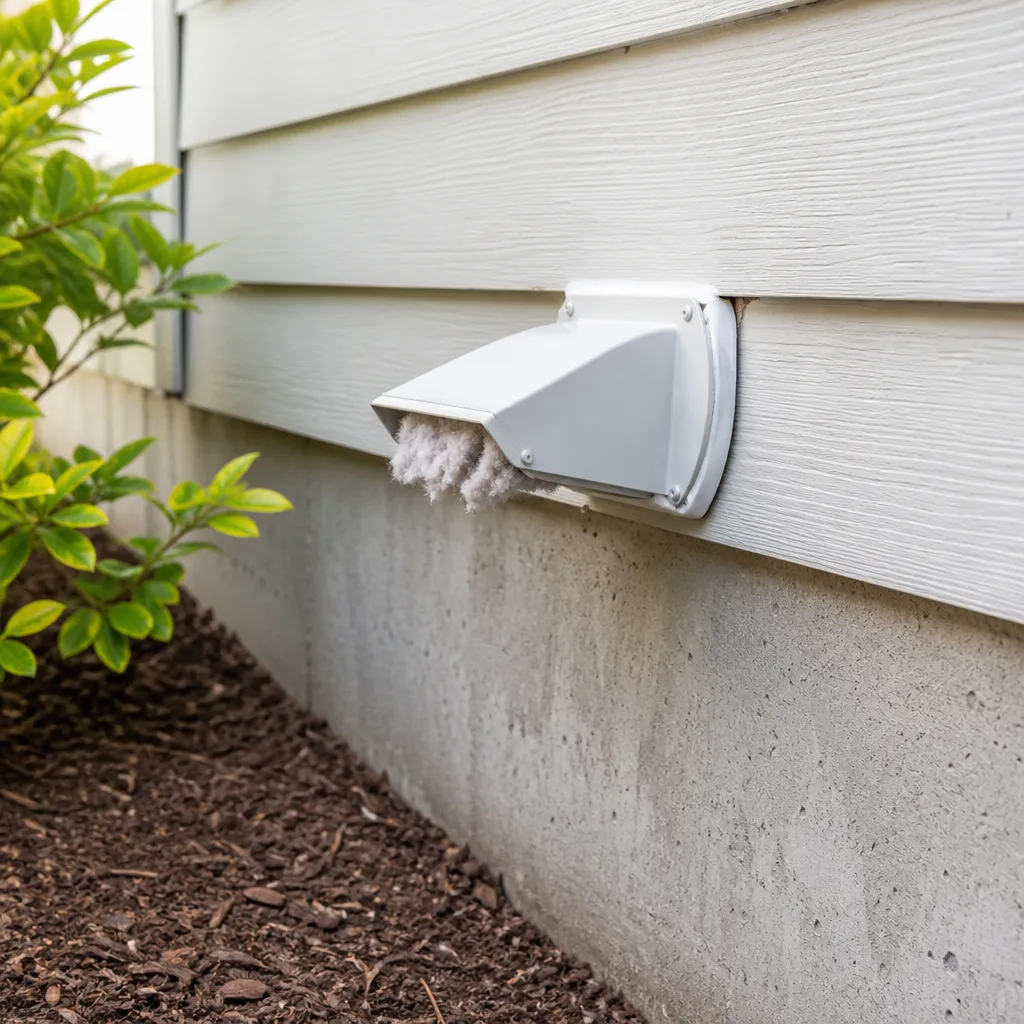 Dryer vent cleaning
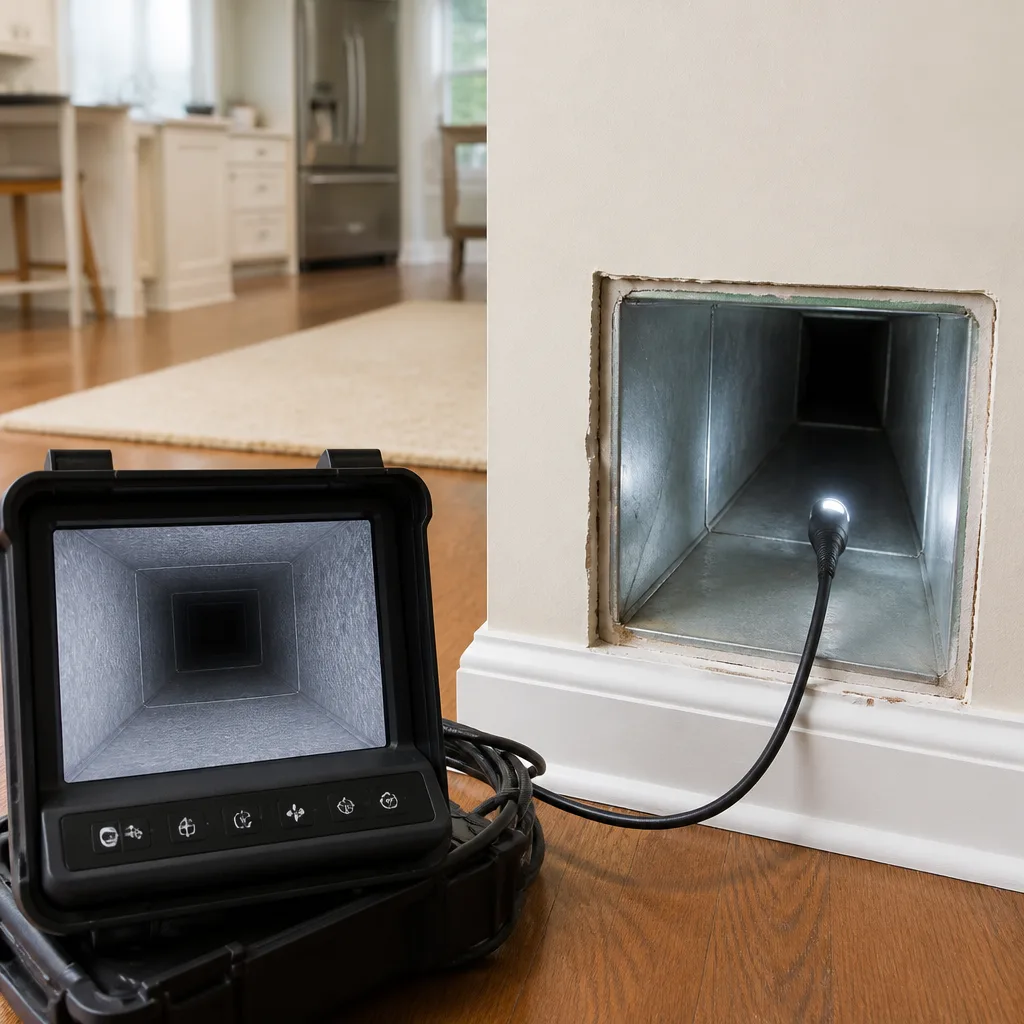 Camera inspection
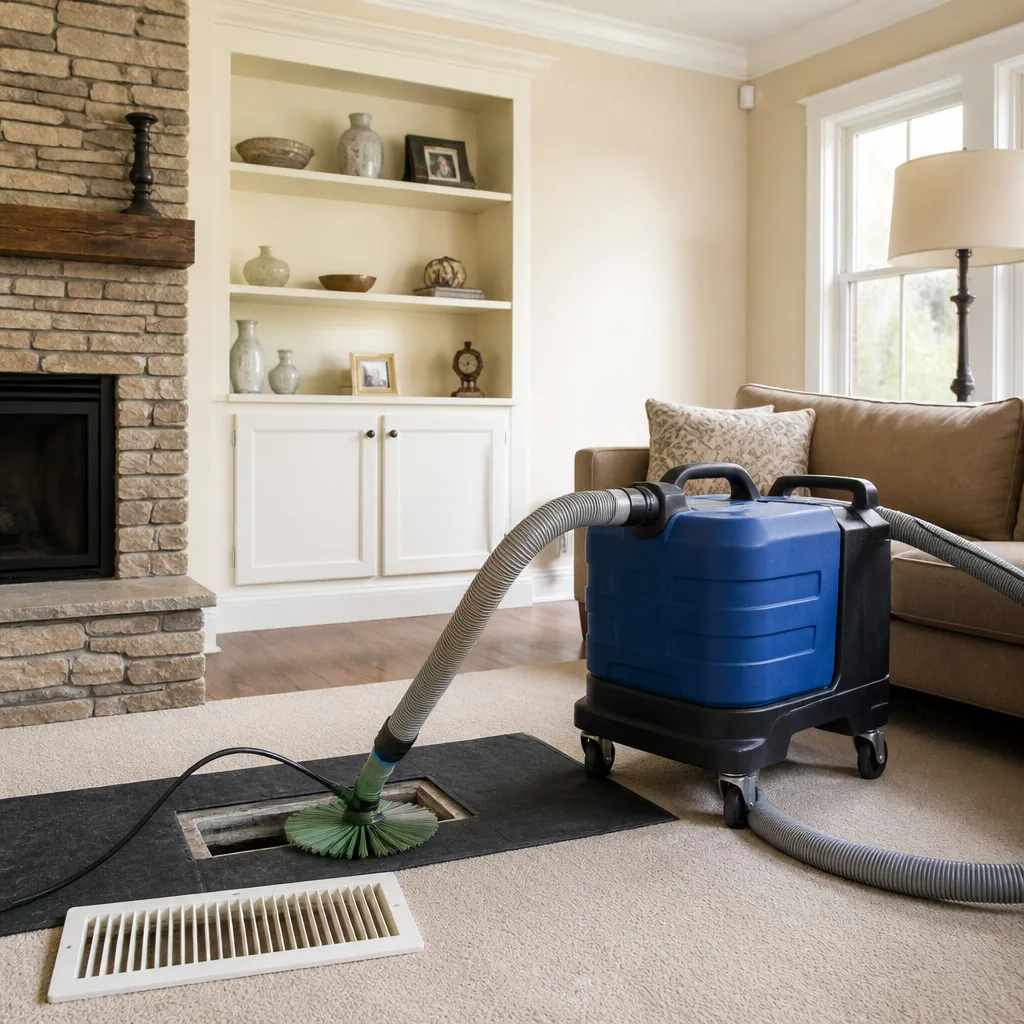 Sanitizing & deodorizing
Whole-system duct and dryer vent check with before-and-after photos - you see exactly what came out of your vents
That "$99 whole-house special" is a bait ad - the real number appears once they are in your hallway, or the "clean" is a shop-vac at the register. We photograph the inside of your ducts before and after instead.
How to Hire a Air Duct Cleaning Contractor in Dallas: A Step-by-Step Guide
In Dallas, the $49 duct-cleaning coupon model relies on one thing: that homeowners won’t ask for a written price covering every line item before the technician arrives. The companies that use it are betting correctly about 70% of the time. Our Air Duct Cleaning services guide walks you through the exact hiring process we’d recommend to a neighbor in Dallas, from the first phone call to the final walkthrough. You’ll learn which questions disqualify bad actors immediately, what a real written quote should itemize, and how to spot the difference between a contractor who cleans ducts and one who just moves dust around.
Quick Answer
Hiring a legitimate air duct cleaning contractor in Dallas comes down to five verifiable things: a written price that itemizes every vent before work starts, a defined arrival window with a live update protocol, a written service guarantee that extends at least 365 days, proof of professional-grade equipment (not a shop vac), and documentation showing what your ducts looked like before and after the job. Call (361) 314-5449 for a free estimate from Kestrel Air Duct Dallas home and you’ll get all five in writing.
Styles & brands we work with
Table of Contents
- Why Most Hiring Advice Fails in Dallas
- The Five Phone Questions That Filter Out Bad Contractors
- What a Written Price Should Itemize
- NADCA and Beyond: What Credentials Actually Mean
- Arrival Window Accountability: Why Four Hours Without Updates Is a Red Flag
- How Duct Cleaning Actually Works: The Equipment That Matters
- The 365-Day Difference: Written Promises vs. Vague Assurances
- A Step-by-Step Hiring Process for Dallas Homeowners
Why Most Hiring Advice Fails in Dallas
Most “how to hire” guides tell you to check reviews, get three quotes, and ask if the company is insured. That’s not bad advice, but it’s not enough in the Dallas duct-cleaning market. The city has a mix of legitimate contractors, franchise operations running rotating crews, and one-off operators who run coupon campaigns during allergy season and vanish by summer. Reviews can be bought. Three quotes mean nothing if all three are bait-and-switch operators quoting the same teaser price. And insurance is table stakes, not a differentiator.
The real problem in Dallas is structural. Duct cleaning is a low-barrier-to-entry trade. A guy with a van, a shop vac, and a Craigslist ad can call himself a duct cleaner. The National Air Duct Cleaners Association (NADCA) estimates that a proper cleaning of a typical Dallas home takes four to six hours with professional equipment. A shop-vac operator can “finish” in ninety minutes because he’s not actually cleaning the system, he’s vacuuming the first few feet of duct he can reach. The homeowner can’t see the difference without before-and-after photos. That gap, between what’s promised and what’s verifiable, is where most Dallas homeowners get taken.
This guide approaches hiring as a filtering process. Each step is designed to disqualify someone before they ever park in your driveway. By the time you’ve worked through the five phone questions and the written price review, you should be left with one or two contractors worth booking. The Air Duct Cleaning in Dallas market has plenty of good operators. The filter just helps you find them faster.
The Five Phone Questions That Filter Out Bad Contractors
The first phone call is a screening interview, not a booking call. You’re not calling to schedule anything yet. You’re calling to see whether the person on the other end can answer five specific questions without hedging. We’ve scripted them below, along with the answers that should immediately disqualify a contractor.
- “Can you give me a written price over the phone or by email before anyone visits?” A legitimate contractor can quote a range based on home size, number of vents, and system type, and will confirm the exact price in writing before work begins. Disqualifier: “We need to see the house first” followed by a refusal to commit anything to writing before arrival. That’s the setup for the upsell.
- “What equipment do you use?” Listen for specific brand names: Rotobrush, Nikro, Abatement Technologies. These are professional-grade systems. A rotary brush agitates debris at the duct wall; a negative-pressure unit pulls it out of the system. Disqualifier: “We use a truck-mounted vacuum” with no brand name, or any mention of a shop vac. A shop vac cannot reach past the first few feet of duct.
- “Will you show me before-and-after photos of my own ducts?” Every legitimate contractor should put a camera in the duct before and after cleaning and show you the images on site. Disqualifier: “You can just look at the vents” or refusal to provide photo documentation. Without photos, you’re trusting a stranger’s word that work happened.
- “What does your written guarantee cover, and how long does it last?” A real guarantee is written, has a defined term, and states what the company will do if work falls short. Our Dryer Vent Cleaning in Dallas work and air duct jobs carry a 365-Day Done Right Promise in writing. Disqualifier: “We guarantee you’ll be satisfied” with no written document and no defined term. Vague assurances are worth less than the paper they’re not printed on.
- “What’s your arrival window, and how will I know if you’re running late?” A professional operation gives a defined window and updates you if the schedule shifts. Disqualifier: “We’ll be there sometime in the afternoon” with no update protocol. That’s not a scheduling policy, it’s an admission that your time doesn’t matter.
We’ve seen Dallas homeowners skip these questions because they feel awkward asking them. Don’t. A legitimate contractor answers all five without pausing. A bait-and-switch operator gets defensive or vague by question two. That reaction is your answer.
What a Written Price Should Itemize
The single most important document in the entire hiring process is the written price confirmation. In Dallas, where the coupon model depends on vague quotes that balloon at the door, this document is your only contract before the van arrives. Here’s what it should contain, line by line.
- System size and type: The quote should state the square footage served, whether you have a single system or multiple, and the HVAC type (heat pump, furnace and AC split, or packaged unit). If the contractor doesn’t know your system type from your address or asks no questions about it, they’re not building a real quote.
- Number of supply and return vents: This is the big one. A supply vent pushes conditioned air into rooms; a return vents pulls air back to the air handler. A written quote should itemize the total count of both. Bait-and-switch operators quote a teaser price that imagines far fewer vents than actually exist in a typical Dallas home.
- Air handler access: The quote should state whether the air handler, coils, and blower are included or priced separately. In a Dallas home, the air handler often sits in an attic or garage, and accessing it adds labor time. A quote that doesn’t mention it is a quote that will revise upward later.
- Any mold or microbial treatment: If you’ve seen visible mold in or around your vents, the quote should include treatment as a separate, clearly priced line item with the specific treatment method named. If the contractor mentions mold for the first time at the door and starts adding line items, that’s a manipulation tactic, not a diagnosis.
- Total price with a written statement that it will not change: The Kingswell Guarantee, which governs every Kestrel Air Duct Dallas job, requires a written price before work begins, with no exceptions. The quote is in the homeowner’s hands before a single vent is touched. That’s the standard you should demand from any contractor.
Vague quotes intentionally omit vent counts, air handler access, and any specialty treatment. They quote a low number to get the booking, then “discover” issues on site. A legitimate written quote looks boring. It has line items and clear scope. Boring is good.
NADCA and Beyond: What Credentials Actually Mean
NADCA membership is a useful signal. It means the company has access to industry standards, training resources, and a code of ethics. But it is not a guarantee. NADCA certifies individuals, not companies, and membership alone doesn’t tell you whether the technician in your home actually follows the standards. Plenty of NADCA-member companies in Dallas do exceptional work. A few use the logo as a credibility shortcut while sending crews with equipment that couldn’t pass a basic inspection.
Here’s what to verify beyond the logo:
- Does the company name appear in NADCA’s member directory? Not just the logo on the website. Anyone can paste a logo into a site template. Verify the listing yourself.
- What does the company say about its process? A NADCA-aligned cleaning should follow source-removal methodology: agitate debris, extract it under negative pressure, and protect the living space during the job with HEPA filtration. If the contractor can’t describe their process in plain terms, they either don’t know it or don’t follow it.
- Is the written guarantee tied to NADCA standards? A real guarantee references what the work should accomplish, not just that it happened. If the company says “we’re NADCA-certified” but offers no written standard for what done-right means, the certification is carrying weight it wasn’t built for.
- Does the company train its own technicians or rely on subcontractors? Some Dallas operations sell the job, then hand it to a rotating crew of day laborers. Ask who will actually be in your home and whether they’re employed by the company you called. Background-checked, uniformed technicians are a signal the company has processes, not just a phone number.
Credentials matter. They matter more when they’re tied to a defined process, documented work, and a written standard. A NADCA logo next to a $49 coupon is a contradiction. Trust the contradiction and walk away.
Arrival Window Accountability: Why Four Hours Without Updates Is a Red Flag
A four-hour arrival window with no update protocol is a service quality problem, not just an inconvenience. It tells you how the company treats your time. But it also predicts how they’ll handle problems on the job. A company that can’t manage its own schedule won’t manage your ducts any better.
The Kingswell Way, the values code that governs every Kestrel Air Duct Dallas visit, includes this commitment: show up in the window we gave. If the schedule shifts, the homeowner hears about it before the window closes. That’s not a courtesy. It’s a structural requirement of running a professional service business.
Dallas traffic makes schedule management harder, not easier. A contractor giving a four-hour window with no update plan is essentially saying: our time matters, yours doesn’t. That’s not a traffic problem. It’s an operating philosophy problem. And it shows up again when the work is done: the same company that wouldn’t update you on arrival will be harder to reach when a problem appears three months later.
When you’re screening contractors, ask specifically: “What happens if you’re running late?” The answer should be immediate and specific. “We call or text you, and we re-confirm the new arrival time” is a real policy. “We do our best” is not. In a city where no-shows are a documented industry pattern, the arrival window is a hiring filter you can apply before anyone ever rings your bell.
How Duct Cleaning Actually Works: The Equipment That Matters
You don’t need to become a technician to hire a good one. But understanding the equipment separates professional cleaning from the shop-vac theater that passes for duct cleaning in some parts of Dallas. Here’s what the tools do, in plain terms.
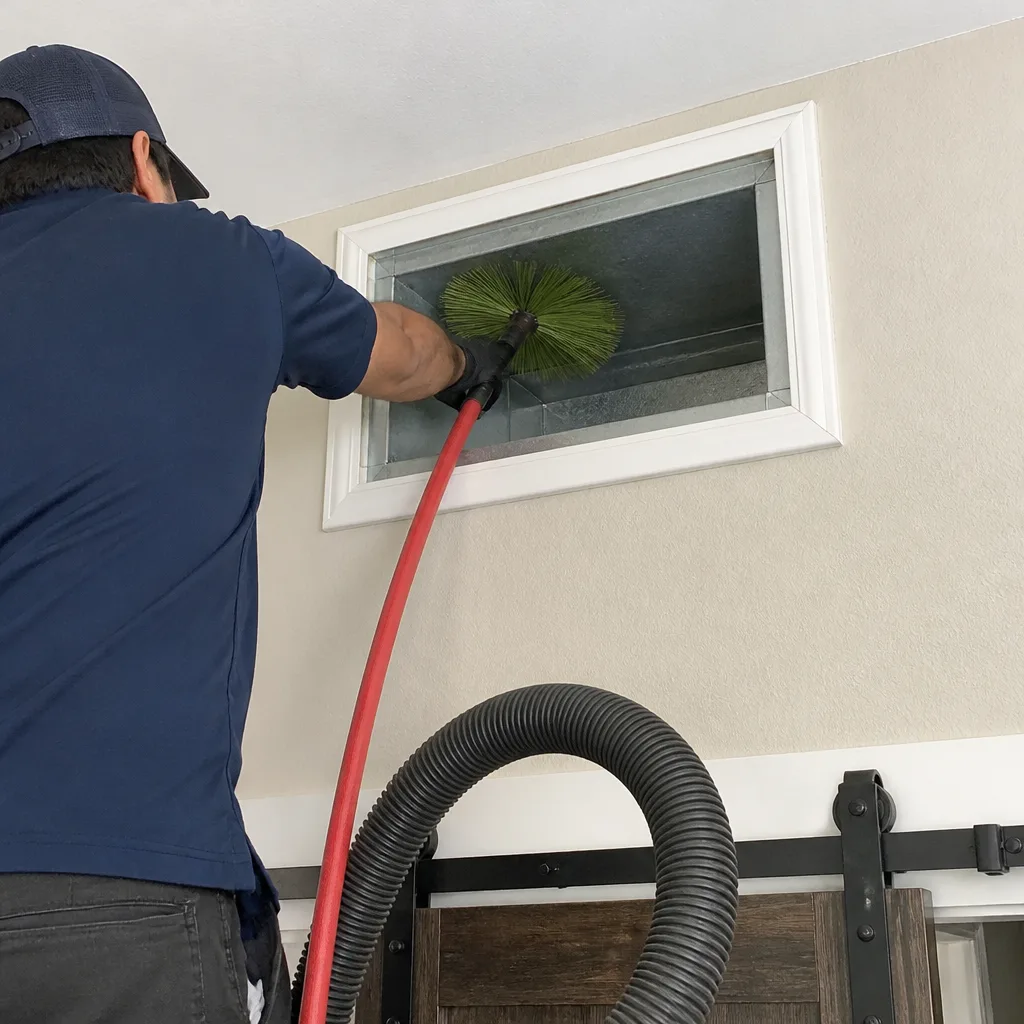
Rotobrush is a rotary brush system. The brush spins inside the duct, agitating debris off the duct walls so it can be extracted. Without agitation, a vacuum alone leaves the compacted layer of dust and pet hair stuck to the duct surface. The brush is what moves it.
Nikro units are negative-pressure extraction systems. A negative-pressure unit pulls air through the entire duct system, creating suction that carries loosened debris out of the house and into a containment unit. The constant flow prevents dust from recirculating into rooms. This is the difference between “vacuuming near the vent” and actually cleaning the entire system.
Abatement Technologies makes HEPA filtration equipment that runs during the cleaning. In a Dallas home where dust, pollen, and construction debris accumulate quickly, HEPA filtration keeps loosened particles from shifting from the ducts into the living room. Without it, a cleaning can temporarily worsen indoor air quality.
Some companies also offer filtration products for homeowners who want to maintain cleaner air between services. Honeywell and Guardsman are two brands we work with. They’re not substitutes for cleaning, but they help extend the results in a climate where the AC runs for large stretches of the year.
A professional cleaning with this equipment typically takes four to six hours on a standard Dallas home. If a contractor quotes two hours, they’re either not doing the full job or they’re cutting corners. Ask what equipment they’ll bring and how long the job will take. The answer tells you a lot.
The 365-Day Difference: Written Promises vs. Vague Assurances
Most satisfaction guarantees are marketing language. They sound good in a pitch and disappear when you try to use them. A written service promise with a defined term is a different thing entirely. It’s a contract.
The 365-Day Done Right Promise that backs every Kestrel Air Duct Dallas job works like this: if the work falls short within 365 days of service, we return and make it right at no charge. The guarantee is documented in writing on every job. It’s not a courtesy extended at our discretion. It’s a standing commitment.
Here’s why the 365-day term matters in Dallas specifically. The city’s climate produces two distinct allergy seasons, and your HVAC system runs hard during the long summer months. Problems from a bad cleaning often don’t show up immediately. A shop-vac operator might leave a clog deep in a return duct that doesn’t cause problems until the system is running twelve hours a day in July. That’s five months after the job. A 30-day guarantee has expired. A 365-day promise hasn’t.
Ask any contractor you’re considering what their guarantee covers in writing, what qualifies as a failure, and what you need to do to invoke it. A company with a real guarantee answers in specifics. A company with a marketing slogan gets vague. The difference matters because ducts don’t fail on a 30-day schedule. They fail when the system strains hardest, and that’s usually months after the invoice.
A Step-by-Step Hiring Process for Dallas Homeowners
Here’s the full process, condensed into a sequence you can work through in a week. Each step filters out another category of bad actor.
- Build a shortlist of three contractors. Start with referrals from neighbors in Dallas, then check NADCA membership and online reviews. Ignore any company running a price that’s dramatically below the market range for the city. If the price looks too good to be true, the final invoice will explain why.
- Call each one and ask the five phone questions. Script them out if it helps. Take notes. Any company that hedges on the written price question or gets defensive about equipment is off the list. You should be down to two by the end of this step.
- Request a written price confirmation from each remaining contractor. It should itemize system size, vent count, air handler access, and any specialty treatment. Compare the documents side by side. If one is vague and the other is specific, you’re not comparing prices, you’re comparing business models.
- Verify credentials. Check NADCA’s member directory. Ask who will actually show up at your home. Background-checked, uniformed technicians are a good sign. Subcontractors are a question mark.
- Book the contractor and confirm the arrival window in writing. You want a defined window and an update protocol. The Kingswell Way standard at Kestrel Air Duct Dallas: show up in the window we gave, and call if anything changes.
- On the day of the job, ask for before-and-after photos. Your technician should offer them without being asked. Accept nothing less than visual proof that the ducts you paid to clean were actually cleaned.
- Keep the written guarantee in a file. Not a drawer. A file. If something goes wrong in month seven, you’ll know exactly where the promise is and what it covers.
This process isn’t complicated. It’s just structured. In our experience, Dallas homeowners who follow it end up with a good contractor on the first attempt. The ones who don’t are the ones we hear from later, after the coupon crew has come and gone.
Common Mistakes to Avoid
- Booking based on the lowest price. The $49 coupon in Dallas is not a discount, it’s a deposit on a much larger invoice. A legitimate cleaning of a standard three-bedroom Dallas home costs real money because the equipment and labor cost real money.
- Skipping the written price step because the company “seemed nice.” Bait-and-switch operators are professional nice people. The written price is the only nice that matters.
- Accepting a four-hour arrival window with no update policy. That’s not a window, it’s a shrug. If the company can’t commit to a time, they won’t commit to quality either.
- Assuming NADCA membership means quality work. Verify the membership, ask about the process, and require before-and-after photos. The logo alone proves a company paid a fee.
- Not asking about equipment. If the contractor won’t name their equipment brands, the van might be carrying a shop vac. A shop vac cannot clean a duct system.
- Accepting a verbal guarantee. If it’s not written, it doesn’t exist. A 365-day written promise is meaningful. “We stand behind our work” is a sentence, not a guarantee.
- Failing to ask for photo documentation. Without before-and-after images of your own ducts, you’re paying for trust, not verification. Legitimate contractors provide photos automatically.
See the difference
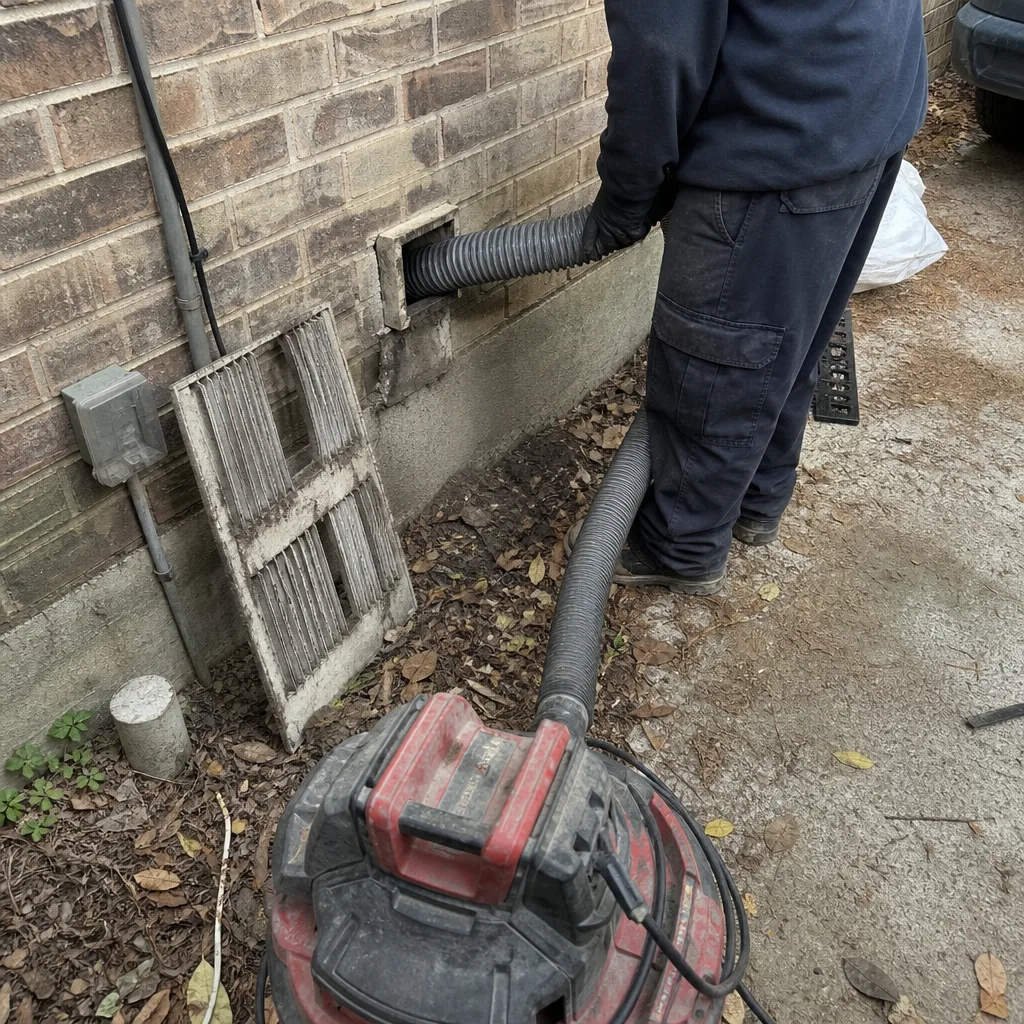 Before
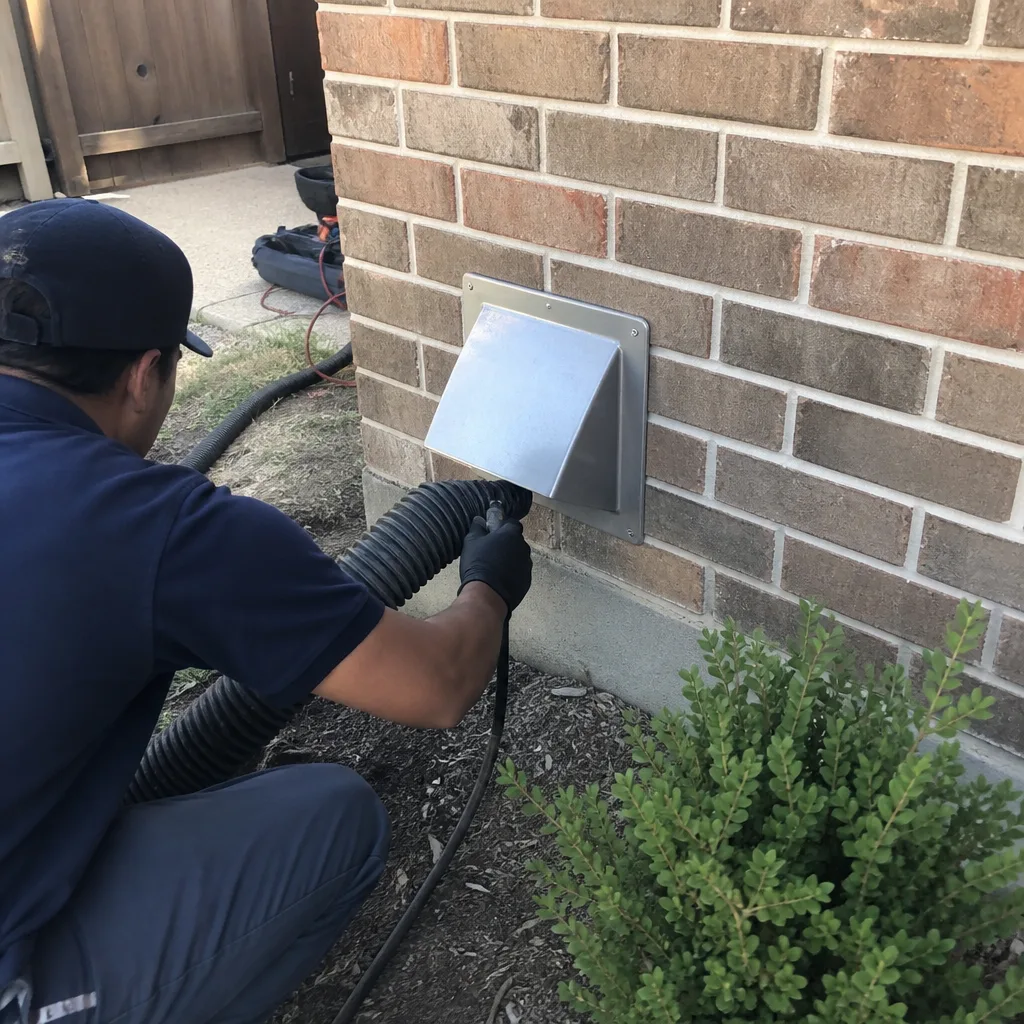 After
After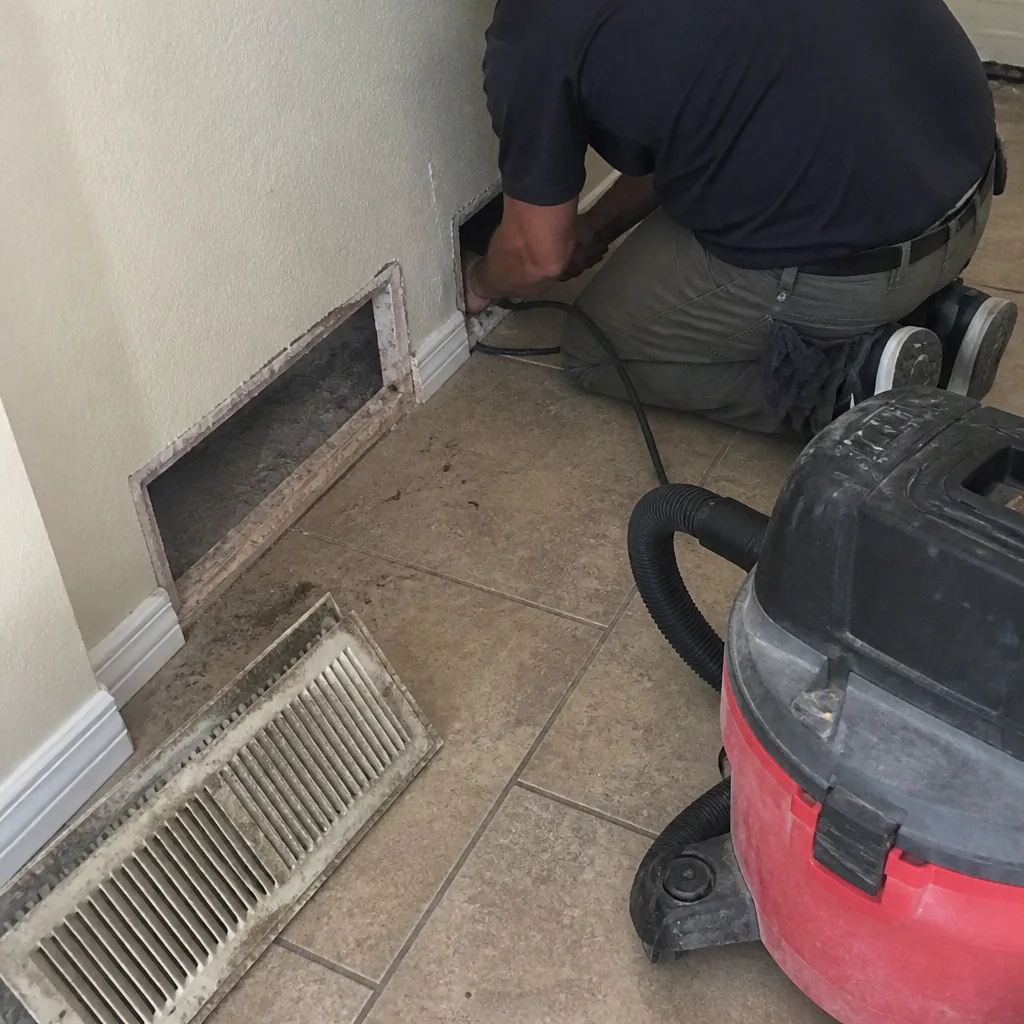 Before
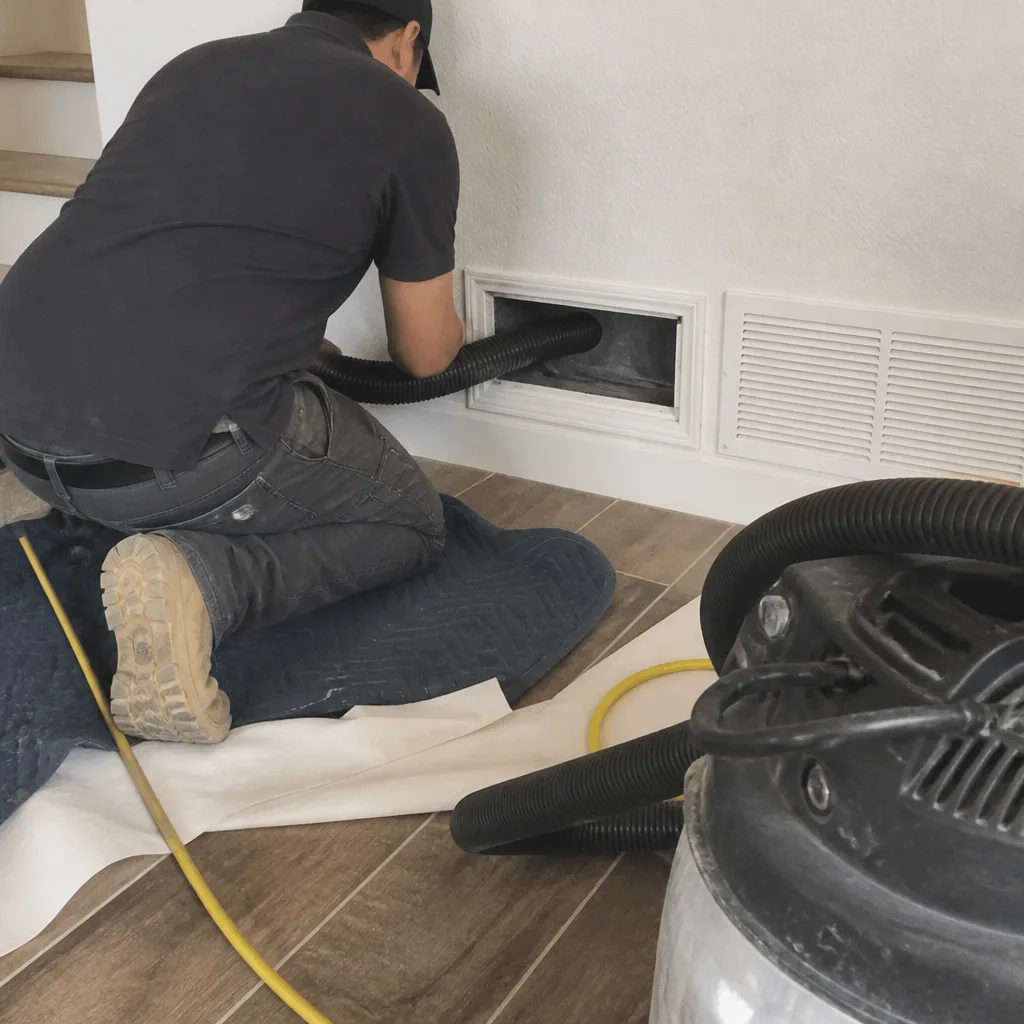 After
After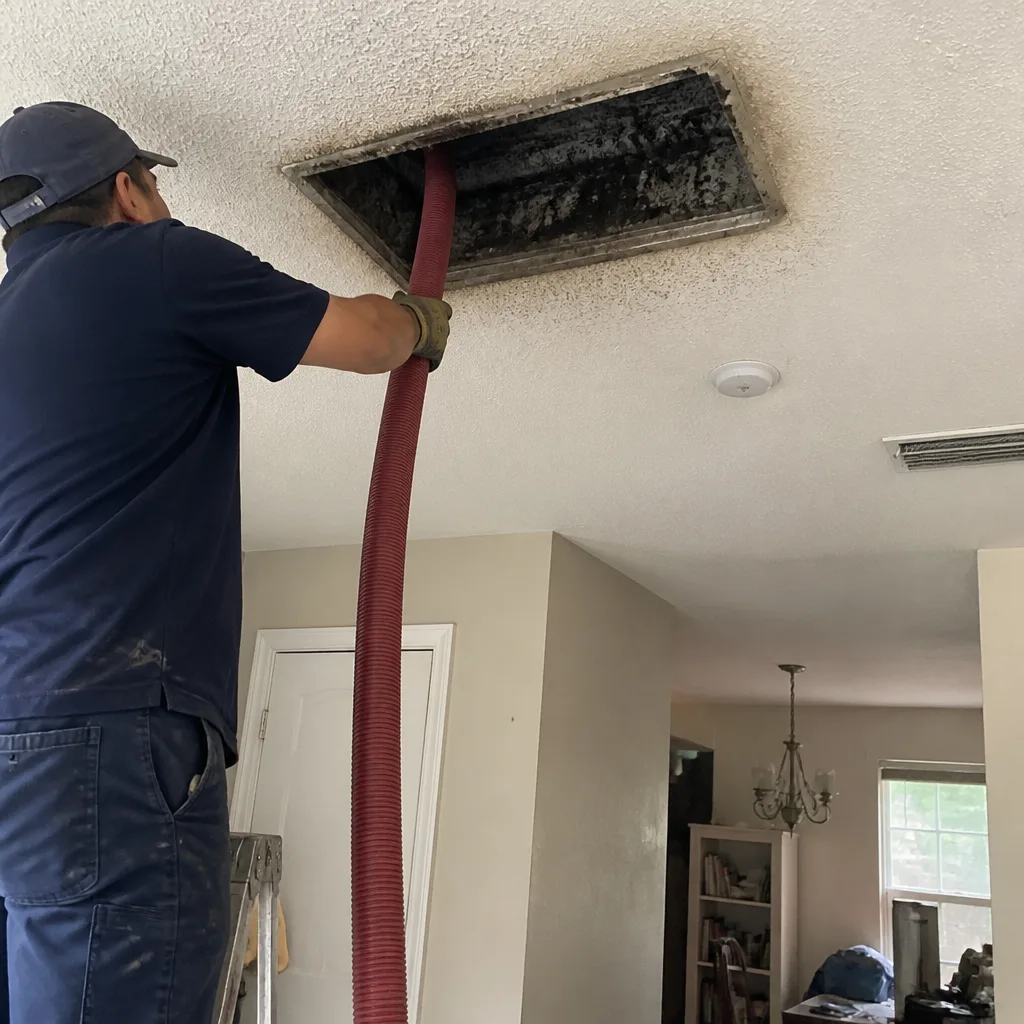 Before
 After
AfterWhen to Call a Professional
Visible dust blowing from vents when the system runs, unexplained allergy symptoms that worsen at home, a dryer that takes two cycles to finish a load, musty odors from the vents, or renovation dust that never seemed to settle: these are all signs that a professional cleaning is overdue. If you’ve never had your ducts cleaned and the home is more than five years old, the system likely has accumulated debris worth removing. In a Dallas climate where the HVAC runs hard for much of the year, that debris recirculates constantly. Kestrel Air Duct Dallas offers free estimates in Dallas. Call (361) 314-5449 and you’ll get a written price before any work begins, with the 365-Day Done Right Promise in writing.
Frequently Asked Questions
For a standard single-system Dallas home, most professional cleanings run between $350 and $700 depending on system size, vent count, and whether the air handler and coils are included-see our Air Duct Cleaning Cost Breakdown: The Dallas Homeowner’s Reference for 2026 for full details. If a quote comes in dramatically below that range, the final invoice will likely land above it. Call (361) 314-5449 for a free written estimate specific to your home.
Cheaper quotes in Dallas almost always omit line items: the quote imagines fewer vents, excludes the air handler, or assumes no specialty treatment. The on-site “discovery” closes the gap. A written price that itemizes everything before arrival is the only defense against this model.
Before-and-after photos of your own ducts, taken with a camera inserted into the system, are the standard proof. Any legitimate contractor provides them without being asked. If a company won’t or can’t, treat the job as unverified.
Every three to five years for most Dallas homes, more frequently if you have pets, live near construction, or have family members with respiratory conditions. The AC system runs hard in North Texas, and that constant airflow moves debris through the ducts continuously.
No. Texas does not require NADCA certification for duct cleaners, which is why the market includes operators with no formal training. NADCA membership is a useful signal of a company’s commitment to standards, but it’s not a substitute for verifying the company’s process, equipment, and written guarantee yourself.
A real guarantee states the term (365 days, for example), what qualifies as a failure, how the homeowner invokes it, and what the company will do in response. If the guarantee is verbal or vague, it’s not a guarantee. The Kingswell Guarantee at Kestrel Air Duct Dallas puts the price, the promise, and the return policy in writing on every job.
The Bottom Line
Hiring a duct cleaning contractor in Dallas is a filtering process. The five phone questions eliminate bait-and-switch operators. The written price eliminates vague quotes. The equipment question eliminates shop vacs. The arrival window eliminates companies that don’t respect your time. And the 365-day written promise eliminates anyone who won’t stand behind work past the invoice date. Most Dallas homeowners get taken because they skip these steps and trust a coupon. You now know better. Run the filter, get a written price, and call (361) 314-5449 if you want the whole process made simple.
Written by Dale Whitmore, Owner at Kestrel Air Duct Dallas, serving Dallas since 2004. Explore more guides & resources on our blog.