
Last updated October 15, 2026
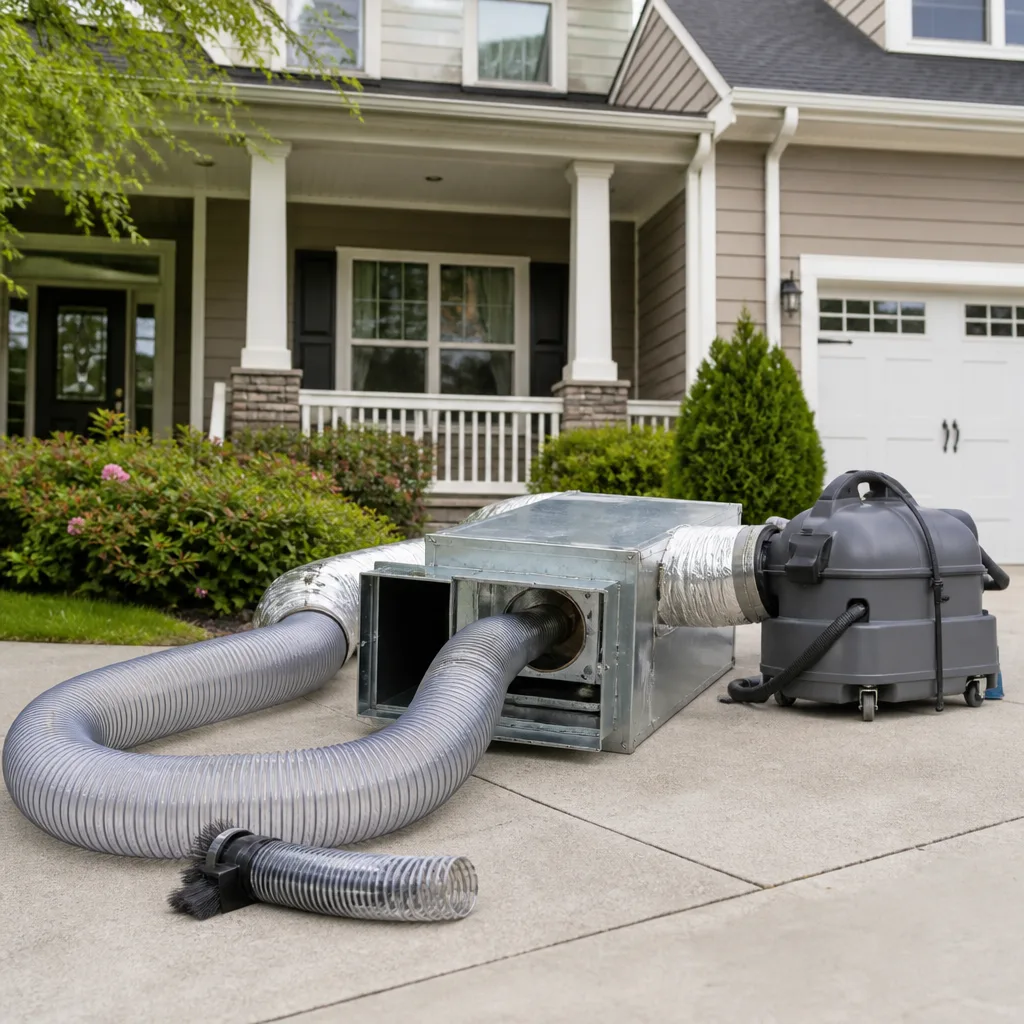 Whole-home duct cleaning
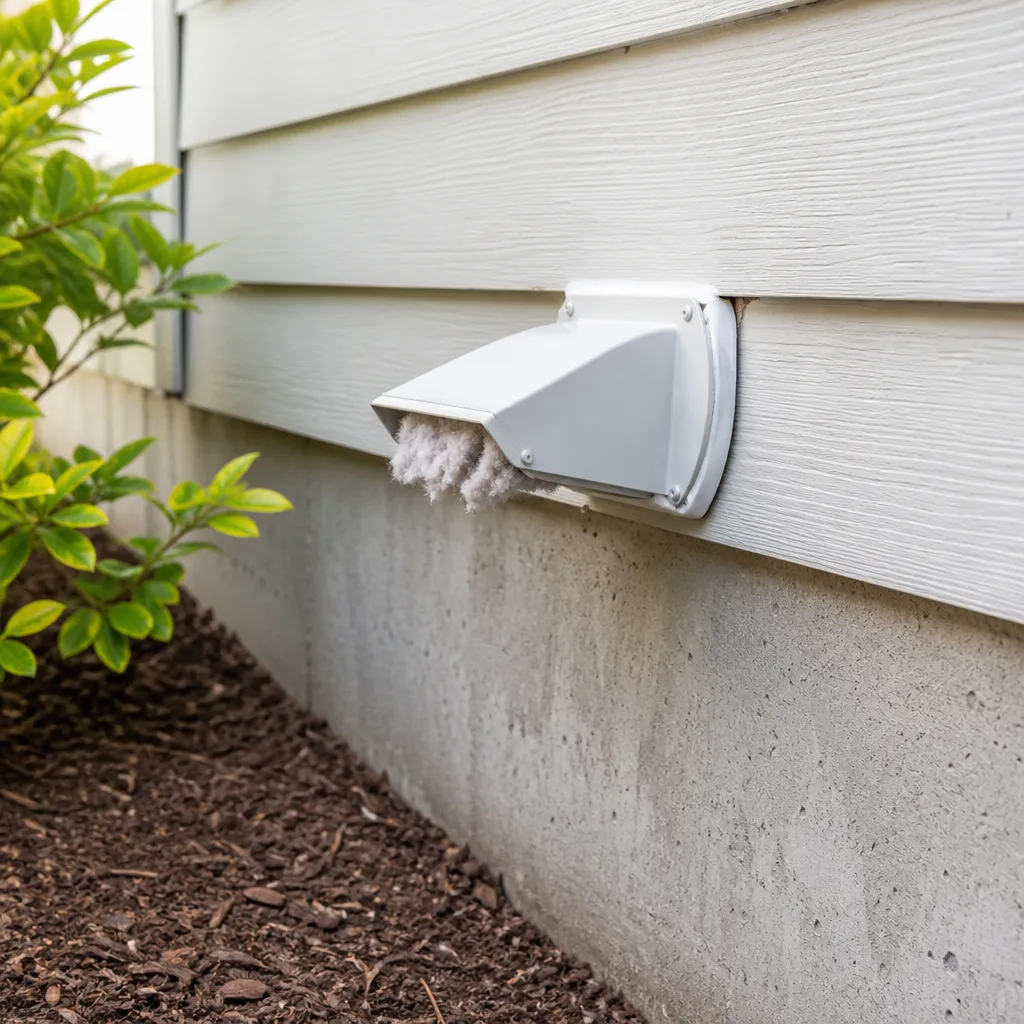 Dryer vent cleaning
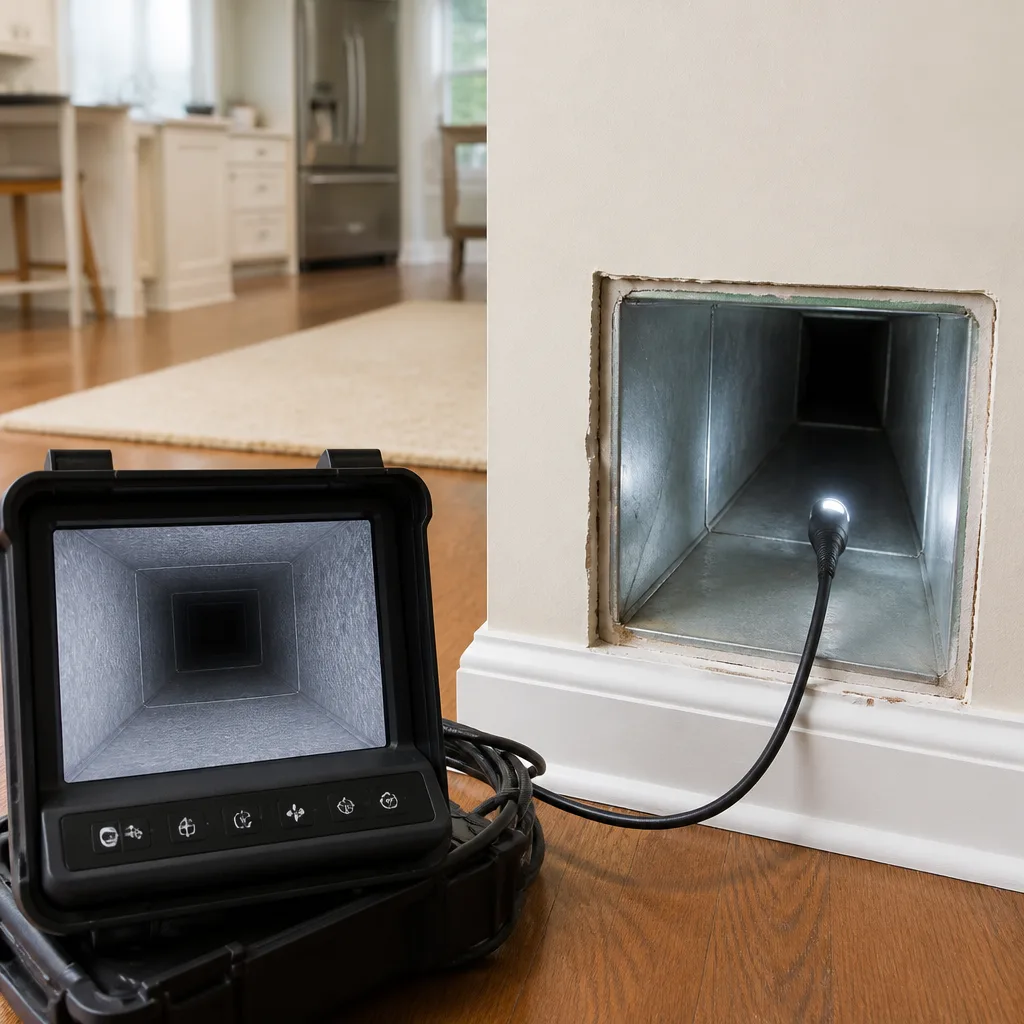 Camera inspection
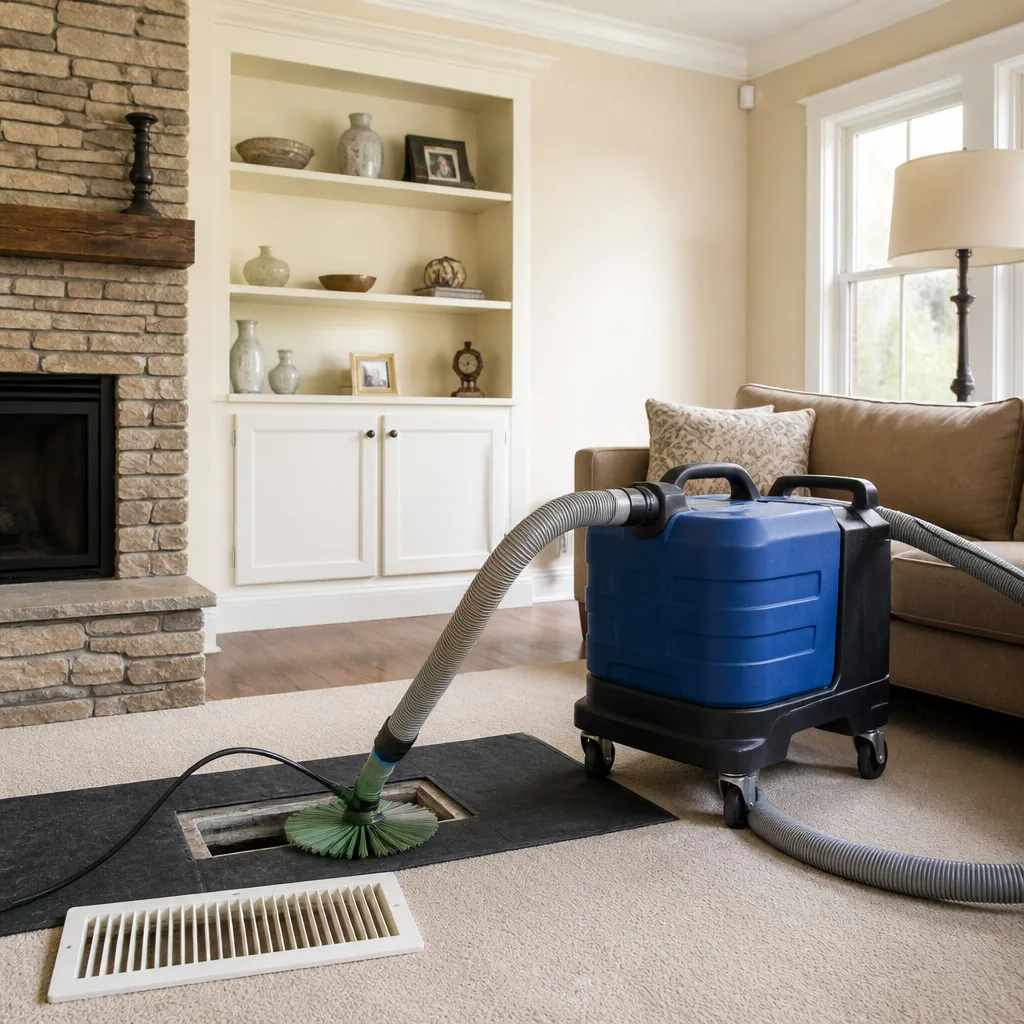 Sanitizing & deodorizing
Whole-system duct and dryer vent check with before-and-after photos - you see exactly what came out of your vents
That "$99 whole-house special" is a bait ad - the real number appears once they are in your hallway, or the "clean" is a shop-vac at the register. We photograph the inside of your ducts before and after instead.
DIY vs Professional Air Duct Cleaning: The Dallas Homeowner’s Decision Guide
Here’s a number most guides won’t give you: a standard consumer shop vacuum pulls about 1 to 2 inches of water column suction. The truck-mounted negative-air machines used in our Air Duct Cleaning services pull 8 to 12 inches. That gap isn’t a detail. It’s the difference between moving dust around inside your ducts and actually removing it from your Dallas home. This guide draws a clear line between what a homeowner can genuinely do well and what requires equipment you can’t rent at a hardware store. You’ll learn what register-level maintenance accomplishes, why the physics of negative-air extraction matters in Dallas’s particular dust environment, how to spot a “blow-and-go” quote, and exactly what a legitimate professional job should leave behind for you to verify. By the end, you’ll know when to grab a screwdriver, when to call someone, and how to make sure you’re not paying for a shop-vac job at professional prices.
Styles & brands we work with
Quick Answer
DIY air duct work is genuinely useful for register cleaning, visible return-grille vacuuming, and filter replacement, but it cannot clean the interior surfaces of your duct runs because you cannot create the negative-air pressure that actually pulls embedded debris out of the system. Professional cleaning is the right call when ducts have accumulated visible dust inside the boots, after any renovation, after water intrusion, or when no one can remember the last cleaning. The honest answer: DIY the maintenance, buy the extraction.
Table of Contents
- The Physics Problem: Why Your Shop Vac Can’t Do the Job
- What a Dallas Homeowner Can Actually DIY (and Do Well)
- The Dallas Factor: Climate, Construction Debris, and What Gets Into Your Ducts
- Negative-Air Extraction, Explained in Plain English
- How to Spot a Blow-and-Go Quote (It’s Only Marginally Better Than DIY)
- What a Professional Cleaning Should Leave Behind: Verification You Can Point To
- What It Costs: Honest Numbers for Dallas
- Common Mistakes to Avoid
- When to Call a Professional
- Frequently Asked Questions
- The Bottom Line
The Physics Problem: Why Your Shop Vac Can’t Do the Job
The reason DIY duct cleaning fails isn’t effort. It’s air pressure. A shop vacuum, even a good one, generates enough suction to pick up loose debris within a few inches of the hose end. That’s fine for a workbench. But your duct system is a network of enclosed passages, some running 30 or 40 feet from the register to the main trunk. The air needs enough pull to travel that entire distance, carrying dust and debris with it, and exit into a collection chamber without scattering back into the living space. At 1 to 2 inches of water column, a shop vac simply doesn’t have the pull.
What actually happens when you run a shop vac hose into a register? The loose surface dust within arm’s reach gets pulled out. The debris deeper in the run, the particles adhered to the duct walls by static cling and humidity, and the accumulation at elbows and junctions stays put. Worse, the air turbulence you create can dislodge some of that material and send it airborne, where it resettles further down the duct or drifts into other rooms. We’ve walked into Dallas homes where a homeowner spent a full weekend cleaning ducts with a rented vacuum, only for a camera inspection to show debris packed into the first elbow past every register. The tool didn’t fail. It was asked to do something outside its physical capability.
What a Dallas Homeowner Can Actually DIY (and Do Well)
The capability line isn’t “nothing vs. everything.” There’s a meaningful band of maintenance that a homeowner can perform genuinely well, and doing it consistently reduces how often a professional cleaning is needed. Here’s the honest list.
- Register and grille removal and washing. Every register in your home pops out or unscrews with basic tools. Washing them in warm soapy water removes the visible dust, pet hair, and cooking residue that accumulates on the fins. This is real, useful work. A clean register means air moves through freely and doesn’t pick up debris on its way into the room.
- Accessible return-grille vacuuming. The return grille is where air enters your duct system, and it’s usually the dirtiest visible surface in the whole setup. Remove the grille, vacuum the opening thoroughly with a shop vac attachment, and reach as far into the accessible cavity as the hose allows. You’ll pull out a surprising amount of dust and pet hair, and this genuinely improves airflow.
- Filter replacement with the right MERV rating for Dallas conditions. Dallas air carries construction dust, pollen (cedar and ragweed are heavy here), and fine clay particles that blow in from the west. A MERV 8 filter catches some of it. A MERV 11 or MERV 13 catches significantly more and is generally compatible with residential systems. Change it every 30 to 90 days depending on season and whether you have pets. This is the single highest-leverage DIY habit in this guide.
- Shine a flashlight into accessible duct interiors and take photos. You don’t need a professional camera to look into the first foot of duct beyond each register. A bright flashlight and your phone camera will show you whether dust is light and powdery or thick and matted. Document what you see. It gives you a baseline and tells you whether a professional call is warranted.
The DIY lane is real. It keeps the accessible surfaces clean, maintains airflow, and reduces the volume of debris that enters the deeper system in the first place. What it cannot do is clean the duct walls, the elbows, the trunk line, or anything more than a few feet from an opening. That requires air pressure you don’t have.
The Dallas Factor: Climate, Construction Debris, and What Gets Into Your Ducts
Dallas isn’t like other markets. The specific conditions here make duct interiors dirtier than they would be in a damper or cleaner climate, and they shape what a cleaning actually needs to accomplish. If you’re reading this as a Dallas homeowner, the generic advice you find on national sites undersells your specific situation. For Seasonal Air Duct Cleaning Care for Dallas: Year-Round Homeowner’s Guide, see our seasonal breakdown.
First, the climate. Dallas summers push AC systems to run nearly continuously from June through September. That means air is moving through your ducts 18 to 22 hours a day during peak season, and every hour is an hour of dust collection on duct walls. The air outside is dry, which means fine particulates stay airborne longer and get pulled into the return rather than settling on the ground. Second, construction. The Dallas-Fort Worth metroplex has been in near-constant building mode for decades. Renovation dust, drywall particles, and concrete fines get tracked into homes and drawn into duct systems. Third, the clay soil. The blackland prairie clay that Dallas sits on dries to a fine powder in hot months. It gets carried inside on shoes and pets, becomes airborne in the house, and accumulates in the duct system. None of this is visible from your register. All of it is real.
What this means practically: a Dallas home with central AC is likely to develop a meaningful layer of dust on duct interiors within three to five years, even with good filter discipline. The debris isn’t just cosmetic. It’s a place for moisture to cling during shoulder-season humidity, and it reduces the free cross-section of the duct, which means your system works harder to move the same volume of air. For more on how cleaning works in this environment, see our guide on air duct cleaning in Dallas.
Negative-Air Extraction, Explained in Plain English
Negative-air extraction is the industry term for the core principle behind professional duct cleaning. The name sounds technical. The idea is simple. A powerful vacuum unit is connected to the duct system, usually at the main trunk line, and it runs continuously during the cleaning. That vacuum creates lower air pressure inside the duct system than the air pressure in the rooms around it. Air wants to move from high pressure to low pressure, so it rushes from the rooms, into the registers, through the ducts, and into the vacuum unit’s collection chamber. The entire duct system becomes a one-way air stream pointed at the collection unit. Debris travels with the air flow and gets trapped in the unit’s filters and collection container, not released into your home.
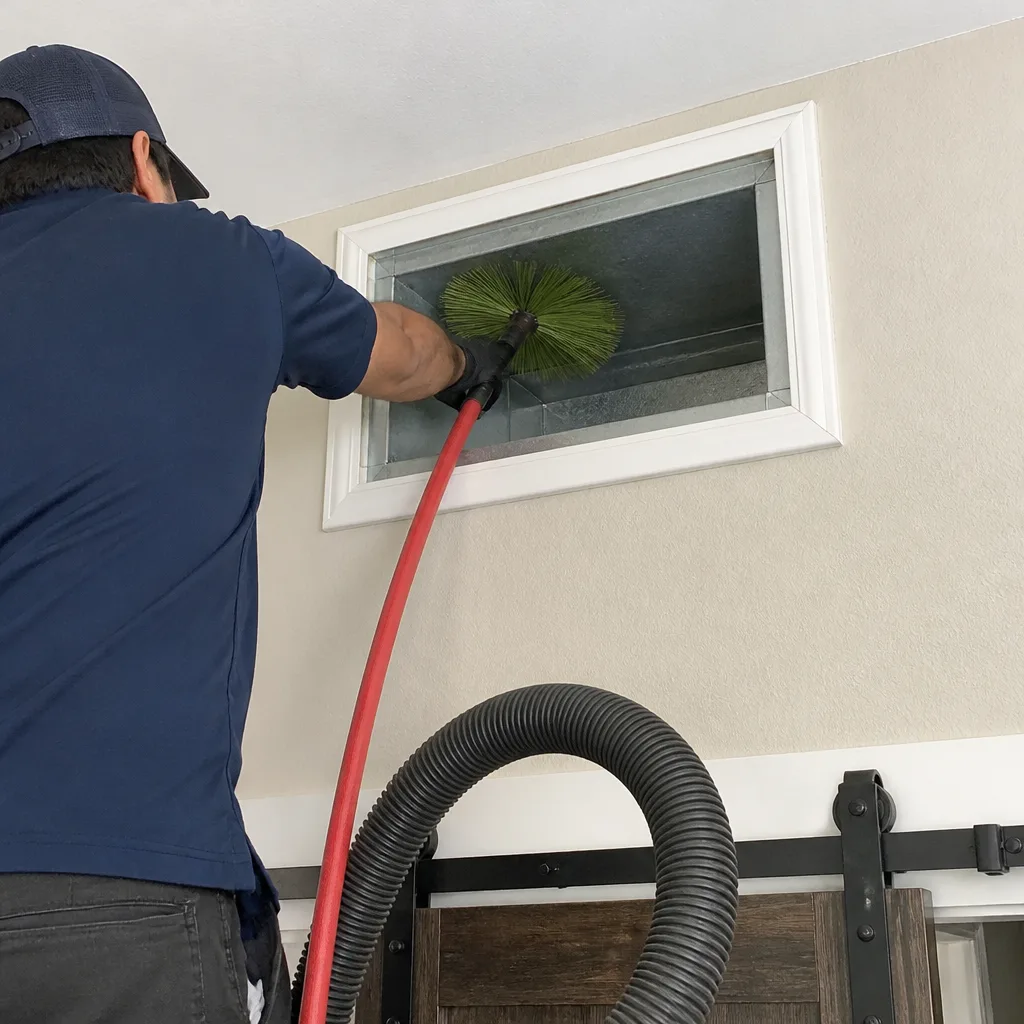
That’s the sealed low-pressure zone. It matters because it means anything dislodged during cleaning travels toward the collection unit by default. The technicians then run long, flexible brush or compressed-air tools through the ducts to dislodge debris from the walls while the negative pressure actively removes it. At Kestrel Air Duct Dallas, our crew uses Rotobrush rotary brush systems to agitate debris at the duct wall, paired with Nikro negative-pressure units to pull the loosened material out of the living space during cleaning. Abatement Technologies HEPA filtration captures the fine particulates so they don’t get reintroduced into your rooms.
The reason this works and your shop vac doesn’t is pressure differential. Eight to 12 inches of water column creates a whole-system current. Two inches doesn’t. It’s the difference between a river and a puddle.
How to Spot a Blow-and-Go Quote (It’s Only Marginally Better Than DIY)
Not every professional quote you get in Dallas represents the real process described above. A common low-price method is called blow-and-go, and it’s worth understanding because it’s the difference between a $400 legitimate cleaning and a $99 job that’s only slightly better than what you could do yourself. The method uses compressed air to blow debris off duct walls, most often from the register openings without a negative-air unit pulling the loosened material out. The debris lifts into the air stream and either resettles further down the duct or drifts into the room when the system runs again. You pay for the work, and the dust comes back or relocates.
Here’s how to evaluate a quote before you book.
- Ask what equipment they use, by name. Negative-air units from manufacturers like Nikro or Abatement Technologies are a strong signal. A truck-mounted vacuum connected to the trunk line is what you’re looking for. If the answer is vague (“we use professional methods”) or centers on a portable vacuum, ask more questions.
- Ask where the vacuum connects to the system. A real cleaning connects to the main trunk line, not just at individual registers. If the process is register-to-register with no trunk connection, it’s likely a blow-and-go.
- Ask about pre- and post-cleaning camera inspection. If the company doesn’t offer camera footage of duct interiors before and after, you have no way to verify the work was actually done. That’s a red flag regardless of price.
- Ask for the total system price in writing, not a per-vent rate. The industry has a bait-and-switch problem. A low advertised price becomes a much bigger invoice once the technician counts vents, adds trunk line charges, and applies “sanitizing” upcharges. A reputable company gives you one price for the whole system before work begins.
A blow-and-go isn’t a scam in the legal sense. It’s just not what most homeowners think they’re buying. If the price sounds too good to fund an hour of professional labor, let alone a full negative-air cleaning, it probably is.
What a Professional Cleaning Should Leave Behind: Verification You Can Point To
The professional option costs real money, and the justification for that cost has to be accountability. You should be able to verify that the work was performed, that it addressed the condition of your ducts, and that the job site was left as promised. Here’s what an accountable cleaning produces.
- Before-and-after camera footage of duct interiors. A quality job includes video documentation of what the duct walls and boots looked like before cleaning and what they look like after. You can watch the tape and see the difference. If a company doesn’t do this, there’s no way to distinguish a thorough cleaning from a quick pass-through.
- A written job record. You should receive documentation of what was cleaned, what the pre-existing conditions were, and what, if anything, was found during the work (mold, pest debris, disconnected runs, collapsed sections). This record is your reference if anything changes after the visit.
- A written guarantee, not a verbal one. Kestrel Air Duct Dallas operates under the Kingswell Guarantee on every single job. That means a written price before work begins, a defined arrival window, a clean job site, and a written guarantee on the work. Our 365-Day Done Right Promise is simple: if it’s not done right, we make it right, documented in writing on every visit. That free return visit isn’t a courtesy extended at our discretion. It’s written into the job from the start.
These aren’t bonuses. They’re the minimum standard for a service that operates inside your home’s air delivery system. If a quote doesn’t include them, ask why. For homeowners dealing with persistent dryer lint issues, the same accountability standard applies to dryer vent cleaning in Dallas.
What It Costs: Honest Numbers for Dallas
Let’s talk dollars. The honest range for professional negative-air duct cleaning in the Dallas market, for a typical 2,000 to 3,000 square foot home, runs between $400 and $800 for the full system. Smaller homes or apartments may run less. Larger homes with multiple trunk lines, flex duct complexity, or substantial buildup may run more. Here’s the comparison table that matters.
| Approach | What You Spend | What You Get | Right For |
|---|---|---|---|
| DIY register cleaning and filter replacement | $15 – $60 in supplies (filter, soap, brush) | Accessible surface cleaning; improved airflow through registers | Routine maintenance on a clean or recently cleaned system |
| Blow-and-go professional visit | $99 – $199 (often advertised) | Debris dislodged and redistributed; no trunk-line extraction | Almost nobody; this is the option that gives the industry a bad name |
| Legitimate negative-air professional cleaning | $400 – $800 (whole system, written quote) | Trunk-line negative pressure, duct wall agitation, HEPA filtration, camera verification, written guarantee | Homes with visible buildup, recent renovation, water intrusion, or no cleaning in 5+ years |
The price of a professional cleaning is what funds the equipment, the training, the insurance, and the accountability. A Nikro negative-air unit costs more than a used truck. The technicians running it are background-checked and uniformed, and they follow a specific code. At Kestrel Air Duct Dallas, that code is the Kingswell Way: say the price up front, show up in the window we gave, leave the place cleaner than we found it, put the guarantee in writing, and come back if it fails. Those five commitments are what the price buys. If they’re missing from a quote, the lower price isn’t a bargain. It’s a different product.
The DIY option, by contrast, makes sense only in one specific scenario: your ducts are clean, you have documentation from a prior professional cleaning, and you’re doing scheduled maintenance to extend the interval. That’s not a cost alternative to professional cleaning. That’s a different activity entirely.
Common Mistakes to Avoid
- Using a shop vac to “clean” ducts and calling it done. You’ll pull out surface dust near the register and leave the rest. Worse, you may dislodge debris that then resettles deeper in the system. This is the single most common DIY duct cleaning mistake we encounter in Dallas homes.
- Buying the cheapest filter and running it for a year. In Dallas’s particulate-heavy air, a cheap fiberglass filter lets most fine dust through and then stops functioning once it’s loaded. A MERV 11 or MERV 13 filter changed quarterly is one of the best things you can do for your ducts.
- Falling for a $99 whole-house duct cleaning coupon. The coupon price gets you in the door. By the time the technician counts vents, adds trunk line charges, recommends sanitizing, and applies “necessary” upcharges, your $99 quote is $600. The initial number was designed to be abandoned.
- Skipping before-and-after camera verification. If you don’t have visual proof of what the duct interiors looked like before and after, you have no way to assess the work. This is the only way to know if you got a real cleaning or a blow-and-go.
- Assuming your ducts are clean because you change the filter. The filter protects the equipment, not the ducts. Dust that gets through the filter or enters through leaks in the return path can accumulate on duct walls even with perfect filter discipline.
- Ignoring the return side. Dallas homeowners tend to focus on supply registers because that’s where air comes out. The return side is where air enters the system, and it’s usually the dirtiest part of the duct network. Vacuum the return grilles and inspect the return boots regularly.
When to Call a Professional
Call a professional when the problem is in the duct interiors, not accessible surfaces. Specifically: visible dust or debris inside the duct boots when you remove a register; any history of construction or renovation that predates the last cleaning; water intrusion, whether from a roof leak, a condensation problem, or a Dallas spring storm; a mold smell that changes with the seasons; or a system that hasn’t been professionally cleaned in five or more years. These aren’t maintenance situations. They’re buildup situations. Kestrel Air Duct Dallas offers free estimates in Dallas, and the quote is in writing before any work begins. Call (361) 314-5449 and speak to a real person, any time of day.
Frequently Asked Questions
For a typical Dallas home between 2,000 and 3,000 square feet, a legitimate negative-air duct cleaning runs $400 to $800 for the whole system. Smaller homes and apartments run less, and larger or more complex systems run more. The price should be a single written figure for the entire job, not a per-vent rate that multiplies when the technician arrives. Call (361) 314-5449 for a free, exact quote for your home.
The cheaper quote is usually a blow-and-go method that uses compressed air at the registers without a negative-air unit on the trunk line, or a teaser price designed to be upcharged once the technician starts counting vents and recommending add-ons. Either way, the cheap price isn’t buying the same service. Ask for the whole-system price in writing before you book.
You should receive before-and-after camera footage of the duct interiors, a written job record, and a written guarantee. If the company doesn’t offer camera verification, there’s no way to distinguish a thorough trunk-line extraction from a quick register pass. Every Kestrel Air Duct Dallas job includes this documentation under the Kingswell Guarantee.
In Dallas, with our climate and construction dust, most homes benefit from professional cleaning every three to five years. Homes with pets, recent renovation, or occupants with respiratory conditions may need it more often. If you’re doing register cleaning and filter replacement consistently, you can extend that interval. Call (361) 314-5449 and we’ll help you assess what’s needed based on what’s actually in your ducts.
Yes, for register removal and washing, return-grille vacuuming, and filter replacement on a system that’s already clean. That’s maintenance, not cleaning. If your ducts have visible interior buildup, no amount of DIY work will remove it because you can’t generate the negative air pressure required for extraction.
For homes with meaningful dust accumulation on duct walls, yes. Removing the debris reduces the volume of particulates that get redistributed into rooms every time the system cycles, which matters in Dallas where the AC runs constantly through the summer. The biggest air-quality factor you can control yourself is filter discipline with the right MERV rating, followed by removal of accumulated debris from the ducts.
The Bottom Line
DIY air duct work is real and useful, but it has a hard boundary. You can clean the registers, vacuum the return grilles, and maintain the filter, and doing those things consistently will keep your system running more efficiently and extend the interval between professional cleanings. What you cannot do is clean the duct interiors, because the suction required to pull embedded debris out of a 40-foot duct run simply isn’t available in residential equipment. The professional option is worth its price when it’s the real thing: negative-air extraction at the trunk line with camera verification and a written guarantee. For more guides & resources, explore our blog. If the quote doesn’t include those, it isn’t the real thing. In Dallas, where the AC runs all summer and the dust is always in the air, the decision usually isn’t whether to clean your ducts. It’s when, and how well.
Written by Dale Whitmore, Owner at Kestrel Air Duct Dallas, serving Dallas since 2004.
See the difference
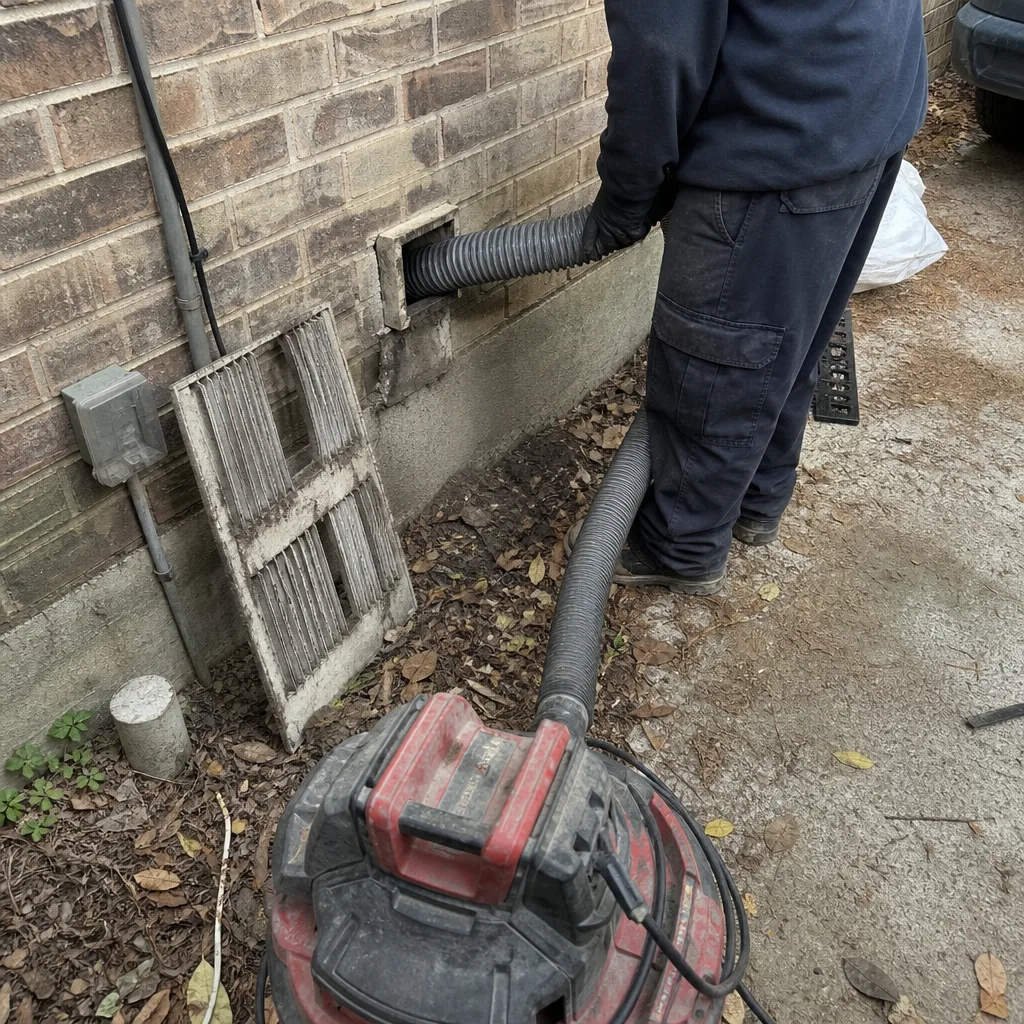 Before
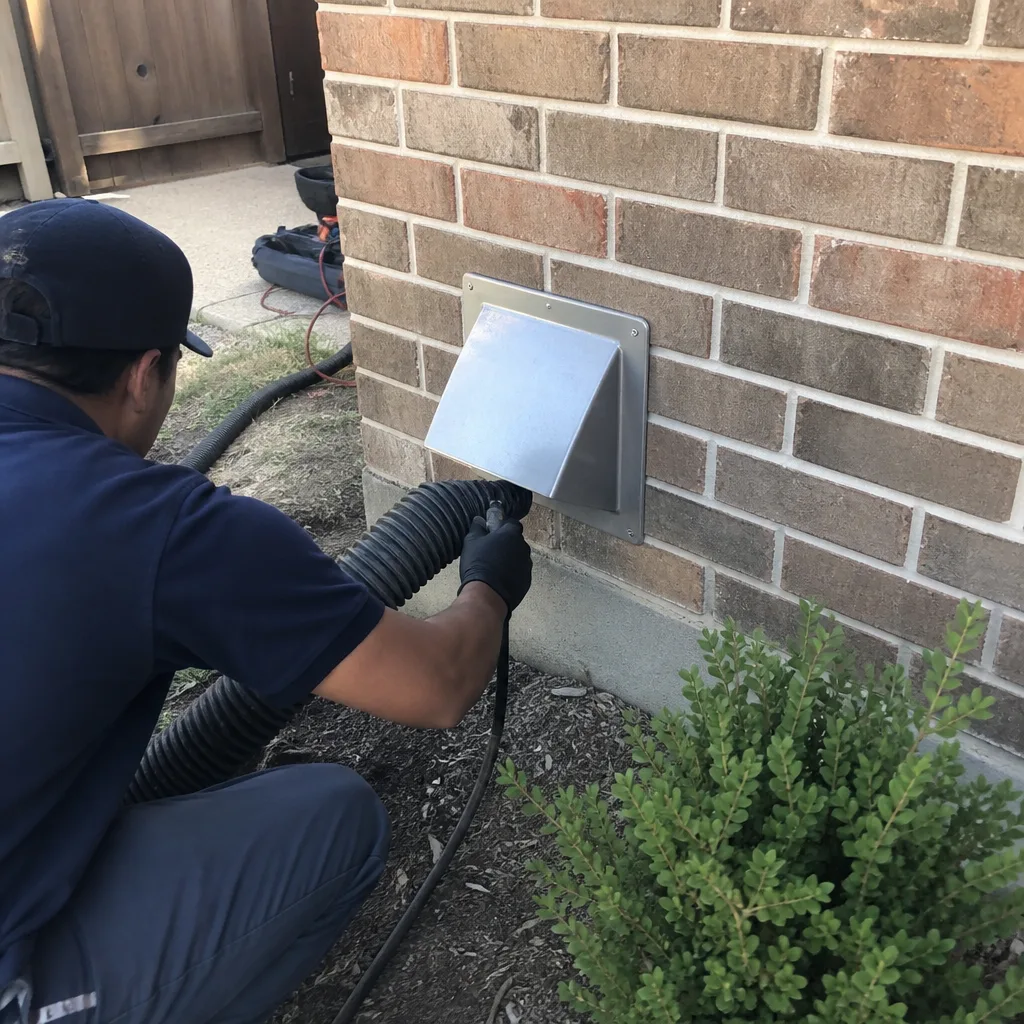 After
After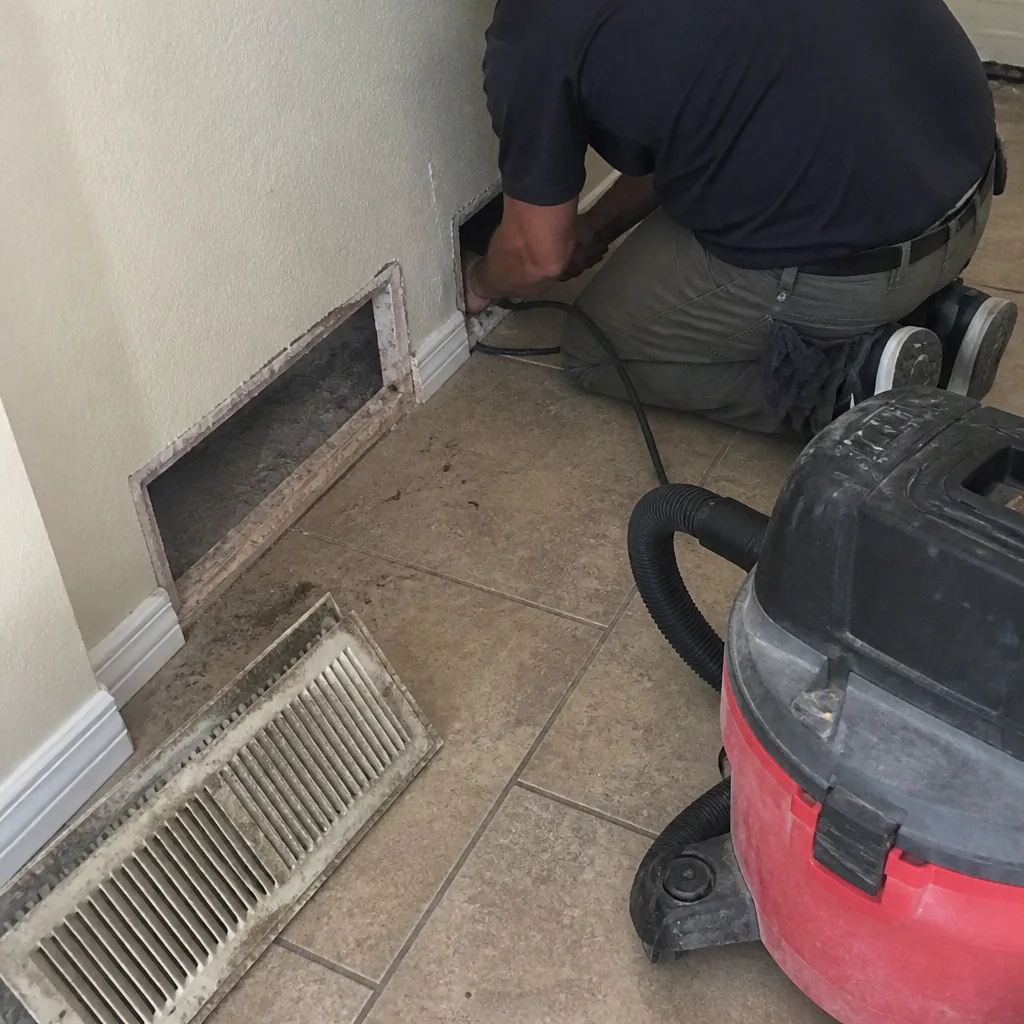 Before
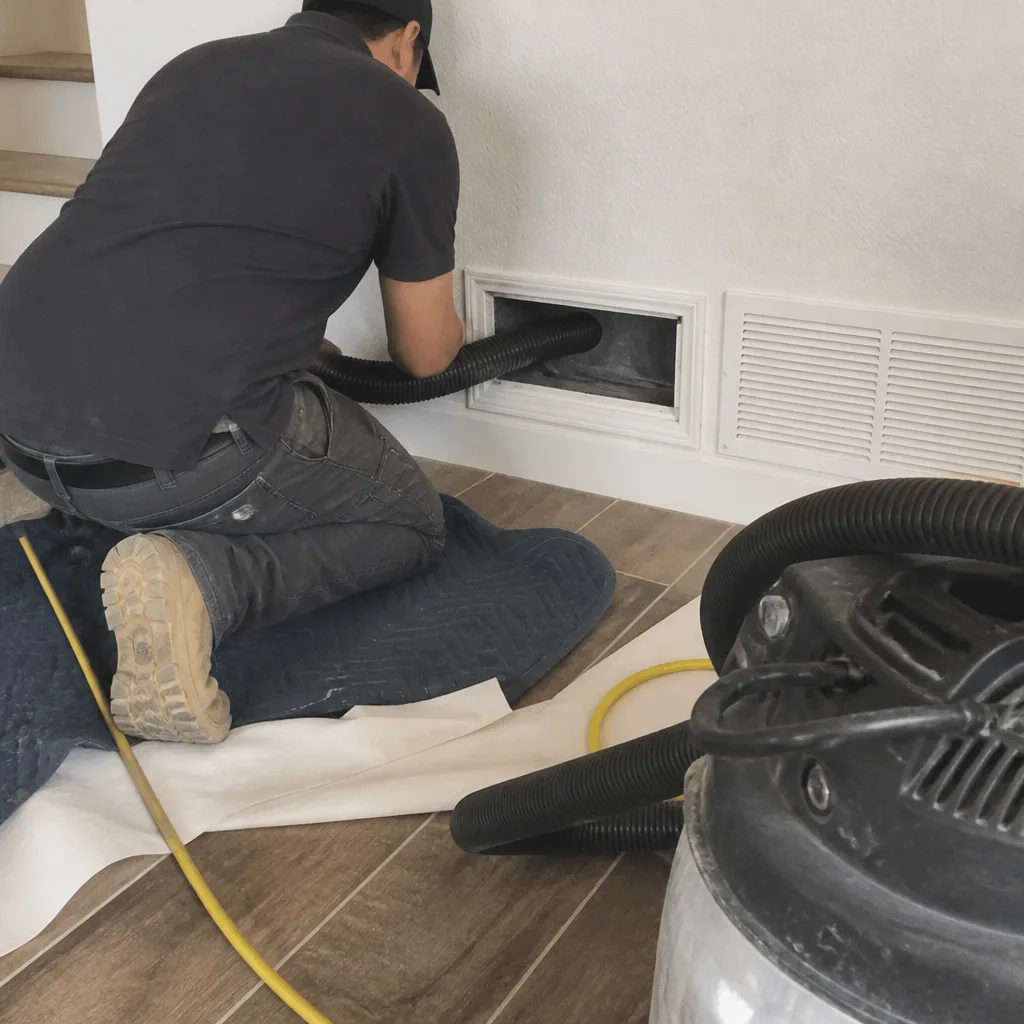 After
After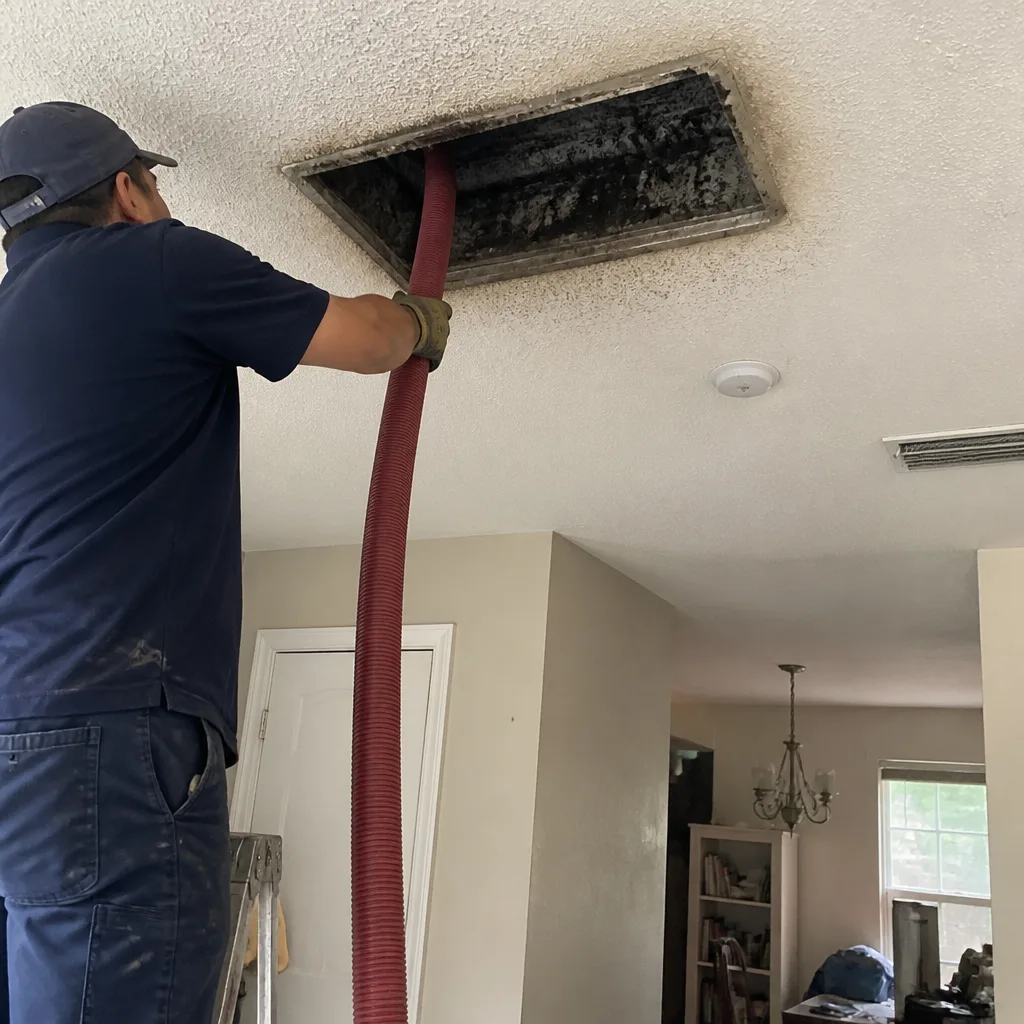 Before
 After
After