
Last updated October 15, 2026
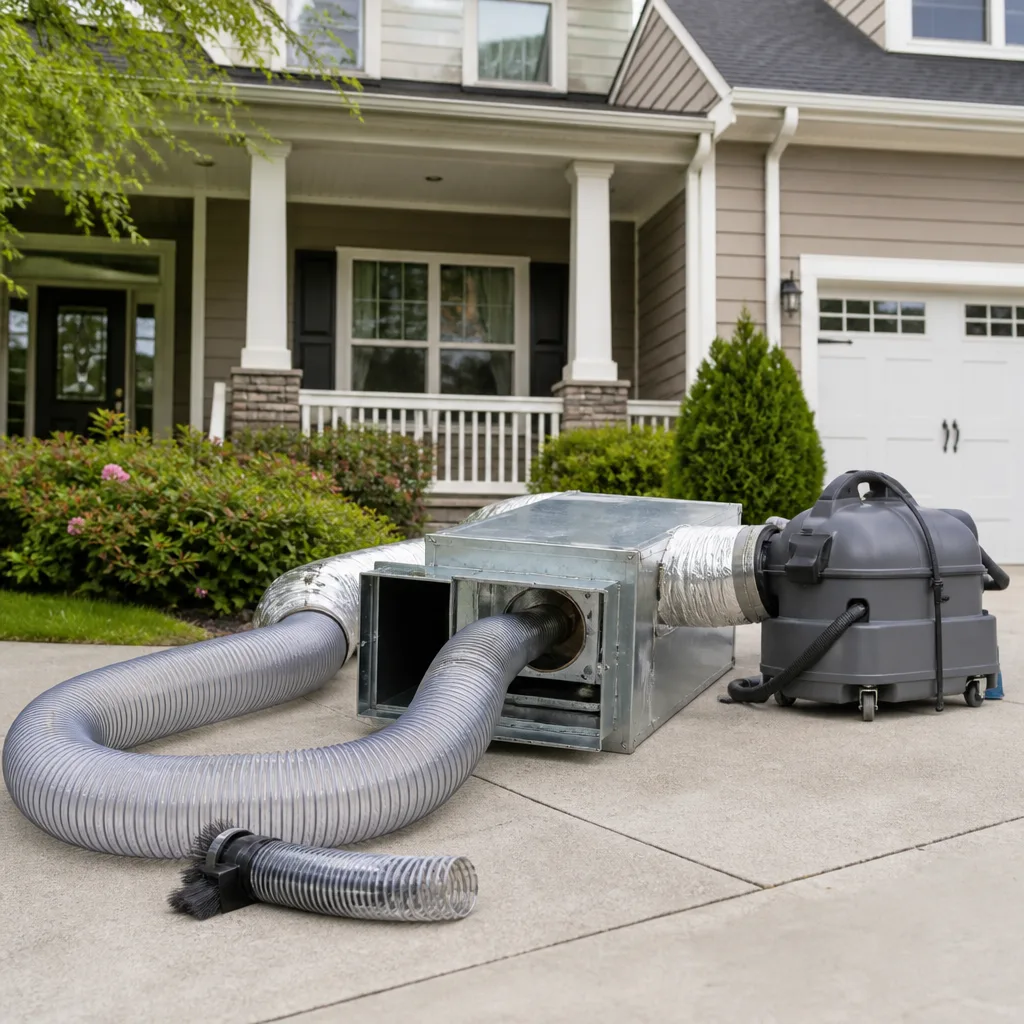 Whole-home duct cleaning
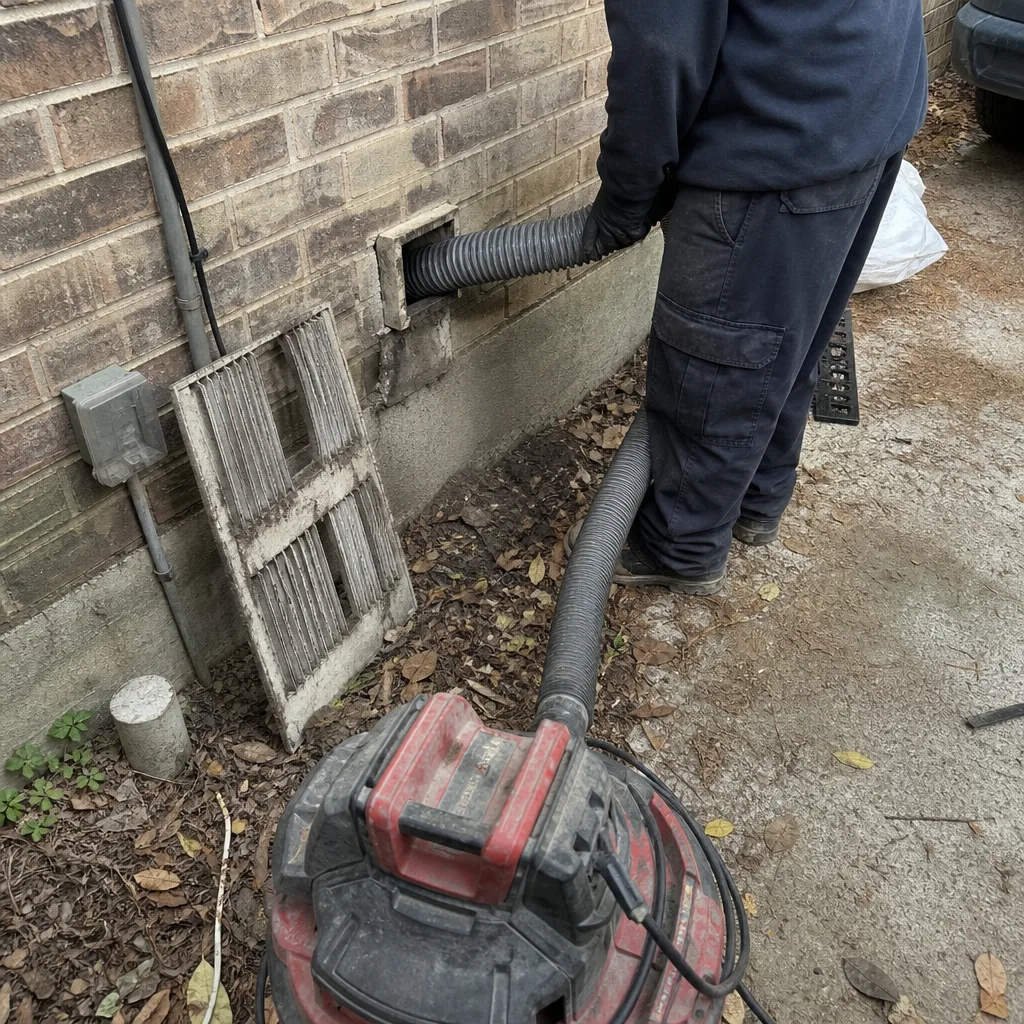
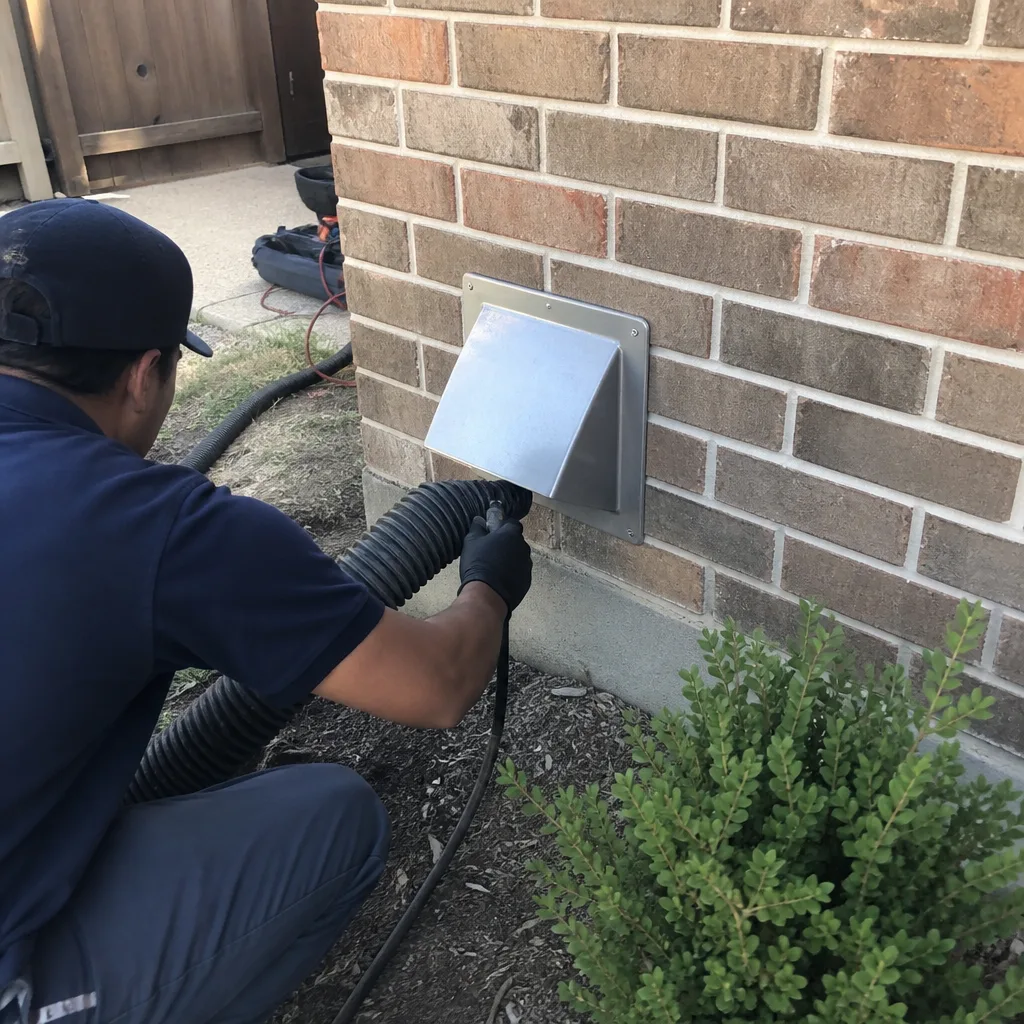
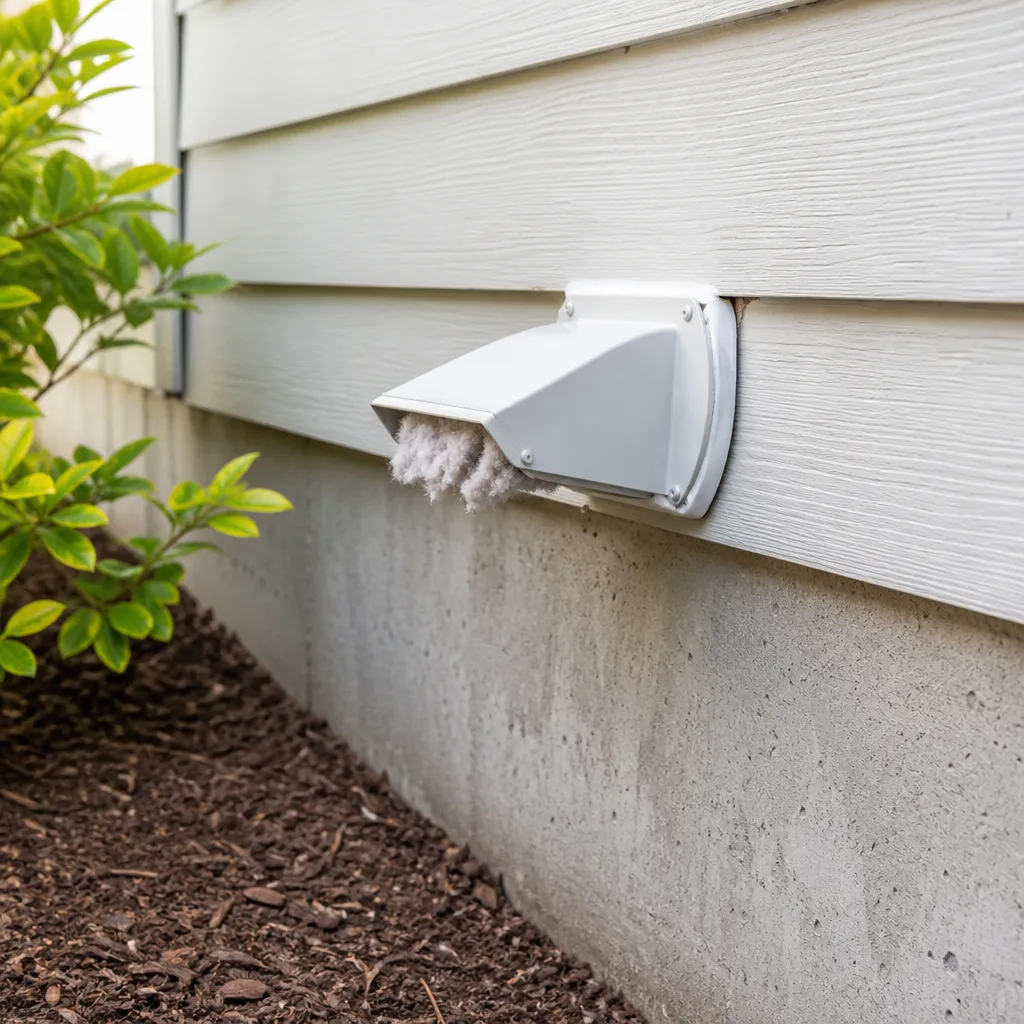 Dryer vent cleaning
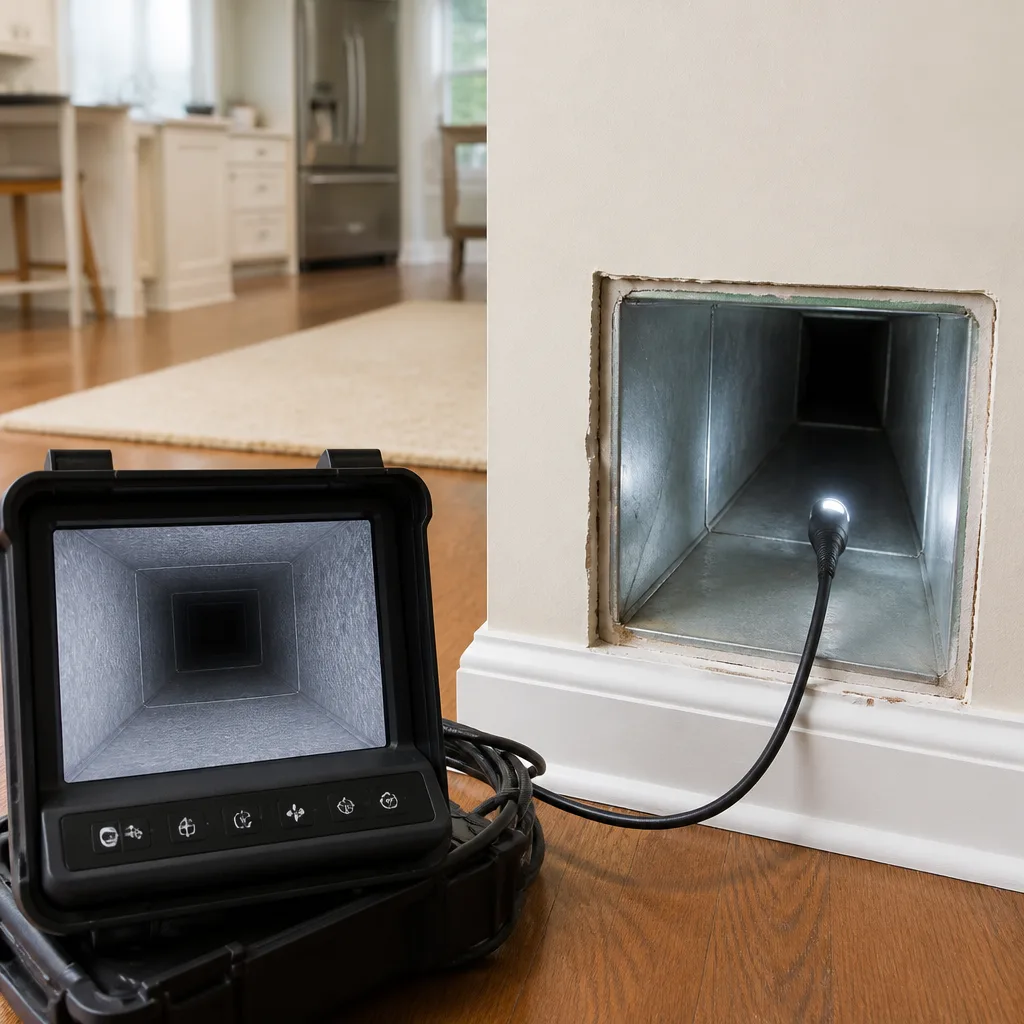 Camera inspection
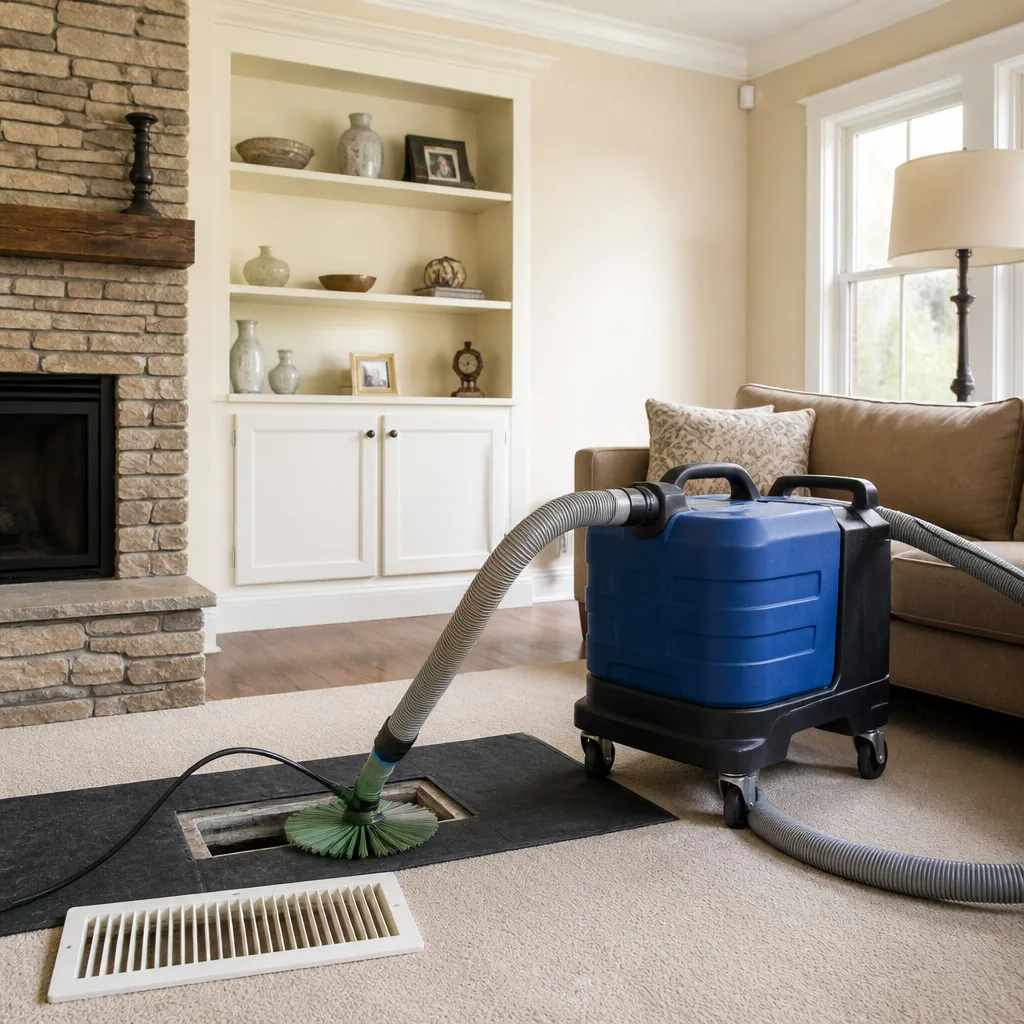 Sanitizing & deodorizing
Whole-system duct and dryer vent check with before-and-after photos - you see exactly what came out of your vents
That "$99 whole-house special" is a bait ad - the real number appears once they are in your hallway, or the "clean" is a shop-vac at the register. We photograph the inside of your ducts before and after instead.
The Complete Guide to Air Duct Cleaning in Dallas
Dallas HVAC systems run an average of 11 months a year, which means your ducts circulate air roughly three times longer annually than a home in Minneapolis, yet most cleaning-frequency advice was written for four-season climates. That mismatch is why so many Dallas homeowners follow generic guidance and end up with ducts that look clean at the register but stay loaded with clay dust, pollen, and mold spores deeper in the system. This guide builds a Dallas-specific framework from the ground up: what actually collects in your ducts here, what removes it rather than rearranging it, what a fair price looks like, and how to verify the work was done right before you pay. For related reading, see our DIY vs Professional Air Duct Cleaning: The Dallas Homeowner’s Decision Guide. If you own a home in Dallas, this is the only duct-cleaning reference you’ll need.
Styles & brands we work with
Quick Answer
Air Duct Cleaning services in Dallas typically cost between $450 and $900 for a full system, depending on home size, number of systems, and whether the air handler, supply lines, and return lines are all included in the scope. In Dallas’s climate, where HVAC systems run most of the year and North Texas clay dust plus Bermuda-grass pollen create a heavier-than-average duct load, most homes benefit from cleaning every three to five years, not the seven to ten often quoted nationally. The method matters as much as the price: look for negative-air extraction with brush agitation, a written scope of work, and before-and-after photos of your own ducts, not a flat “whole-house special” that covers only the registers.
Table of Contents
- Why Dallas Ducts Get Dirtier Than Most
- What Actually Collects in Dallas Ducts
- How Duct Cleaning Actually Works
- Negative-Air Extraction vs. Blow-and-Go: The Difference You Can’t Skip
- What a Legitimate Pre-Job Inspection Should Show You
- How to Read a Written Scope of Work
- How Often Dallas Homes Actually Need Their Ducts Cleaned
- How Much Does Duct Cleaning Cost in Dallas?
- The Dallas Humidity and Mold Window Most Schedules Miss
- Common Mistakes to Avoid
- When to Call a Professional
- Frequently Asked Questions
- The Bottom Line
Why Dallas Ducts Get Dirtier Than Most
The most common question we hear from Dallas homeowners is whether their ducts even need cleaning, and the honest answer depends on factors most national guides never mention. Dallas sits on expansive clay soil, known locally as black gumbo, which dries out during long hot stretches and crumbles into a fine, brick-red powder. That dust is light enough to stay airborne for hours, and it finds its way into return-air intakes, through filter slots that don’t seal tightly, and into the duct system itself. Pair that with Bermuda-grass pollen, which peaks in Dallas from March through October, and you have a particulate load that’s different in both volume and texture from what a home in, say, Seattle or Chicago ever sees.
Then there’s the runtime problem. In most of the country, an HVAC system cycles on and off with the seasons. In Dallas, your system runs almost constantly from late February through November, and the fans keep moving air even during milder winter weeks. That means whatever enters your ducts gets circulated, redistributed, and packed into return elbows and flex-duct liner at a rate three times higher than a northern home’s system. The dust doesn’t just sit there; it gets repeatedly compacted by airflow, which makes it harder to remove with a light brushing and makes the case for actual mechanical agitation and negative-pressure extraction, not a glorified vacuum pass.
Dallas also has one of the highest rates of foundation movement in the country, again because of that clay soil. That matters for ducts because flex-duct runs in attic spaces shift as the house settles, pull at joints, and can separate slightly from register boots. A duct system that isn’t airtight pulls unfiltered attic air into the conditioned airstream, and in Dallas attics, that air carries fiberglass particles, roof-deck dust, and the fine clay powder that settles on everything. A thorough air duct cleaning in Dallas should account for that local reality, not just vacuum the interior surface and call it done.
What Actually Collects in Dallas Ducts
Before you can judge whether a cleaning method works, you need to know what’s actually in your ducts. In Dallas, the contamination profile usually includes five things, and each behaves differently when a technician tries to remove it.
Clay dust. This is the fine, gritty red-brown powder that settles on your ceiling fans two days after you dust them. It gets pulled into return-air pathways and packs into the bottom of return drops and the inside of flex-duct liner. Because it’s heavier than household dust, it doesn’t move with a light brush pass; it needs mechanical agitation at the duct wall to break it loose.
Bermuda-grass pollen. From March through October, Dallas pollen counts routinely hit the “high” range, and Bermuda grass is the dominant species. Pollen grains are sticky and light; they bind to dust layers and to the film that forms on older flex-duct liner, forming a paste-like coating that reduces airflow efficiency and keeps allergens in circulation.
Construction debris. Dallas has been in a building boom for two decades, and in newer homes, drywall dust, wood shavings, and even drink cans get left inside ducts during construction. In older homes, renovation projects push plaster and drywall fines into the return system. We’ve pulled chunks of sheetrock and full handfuls of debris out of ducts in homes where the register covers looked perfectly clean from the hallway.
Mold and biological growth. The Dallas humidity window, roughly May through September, pushes indoor dew points high enough that condensation forms inside ductwork, especially in attic runs where cool air meets a hot, humid space. That moisture feeds mold growth on dust layers and on the fibrous liner inside flex ducts. Not every darkened duct is mold, but in Dallas, the odds are higher than in drier climates.
Pest and rodent evidence. Dallas’s rat and mouse population is substantial, and attic duct systems provide warm, sheltered pathways. Droppings, nesting material, and chewed flex-duct liner are common findings, especially in homes near creek beds or older neighborhoods with mature tree canopies.
Understanding this profile matters because it tells you what your cleaning has to accomplish. A method that only vacuums the register boots leaves the clay dust, pollen paste, and biological material in place. A method that agitates the duct walls and pulls the loosened material into a HEPA-filtered collection unit actually removes it.
How Duct Cleaning Actually Works
Air duct cleaning is not complicated in concept, but it is precise in execution. The goal is to loosen material that has bonded to interior duct surfaces, pull it out of the system under negative pressure, and keep it from re-entering your living space. That last part is where a lot of cheap jobs fail, and where the equipment a company uses actually matters.
Here’s the process a legitimate cleaning follows, step by step:
- Inspection. Before any price is confirmed, a technician should place an inspection camera into at least one supply register, one return register, and the air handler cabinet. You should see the footage, not just hear a summary. If the tech hasn’t looked inside with a camera before quoting, the price is a guess.
- System isolation. The contractor covers all supply and return register openings except the ones being worked. This creates a contained pathway so loosened debris moves toward the collection unit instead of floating out into your living room.
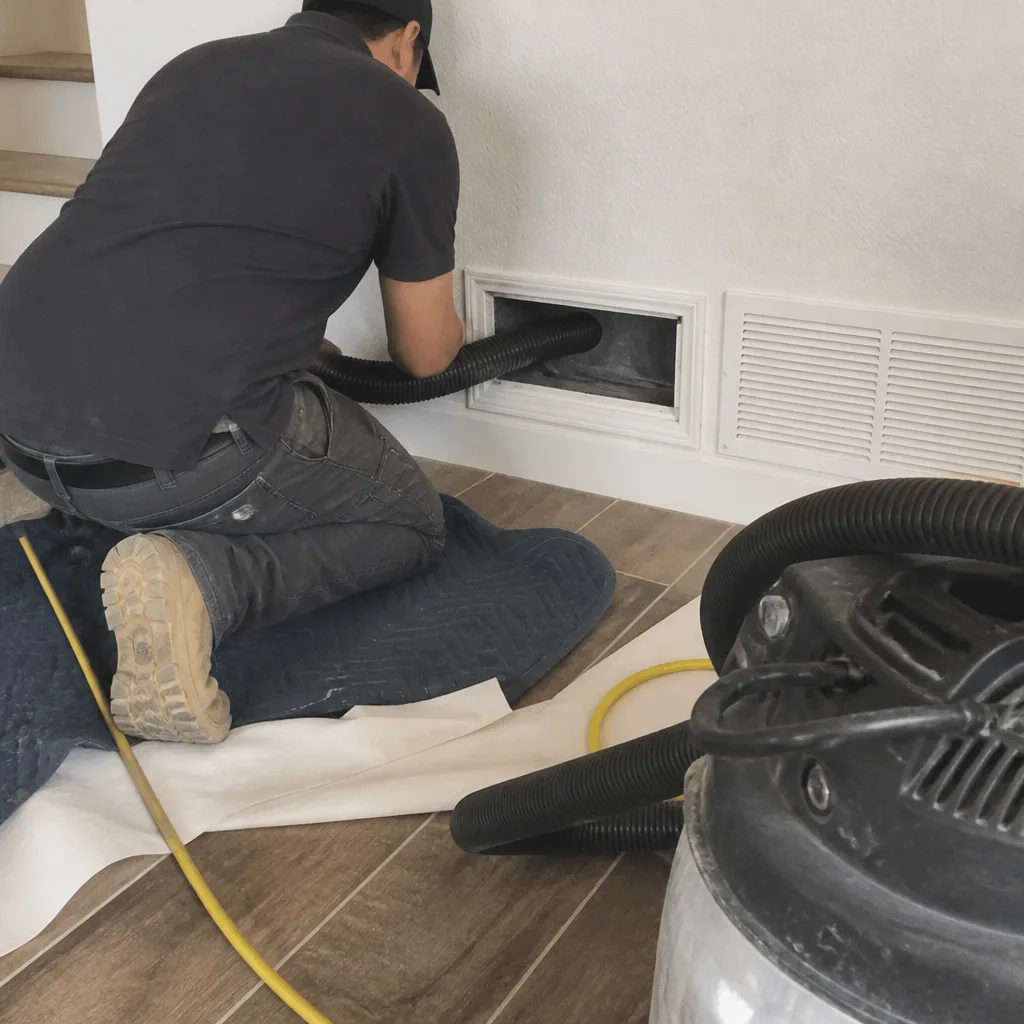
- Negative-pressure setup. A large vacuum collection unit connects to the duct system, usually at the air handler or at a main return trunk. This unit pulls air from inside the ducts outward, which is why the method is called negative-air extraction. It means the duct interior is under suction the entire time, so anything dislodged gets carried to the collection unit’s filter, not blown into the house.
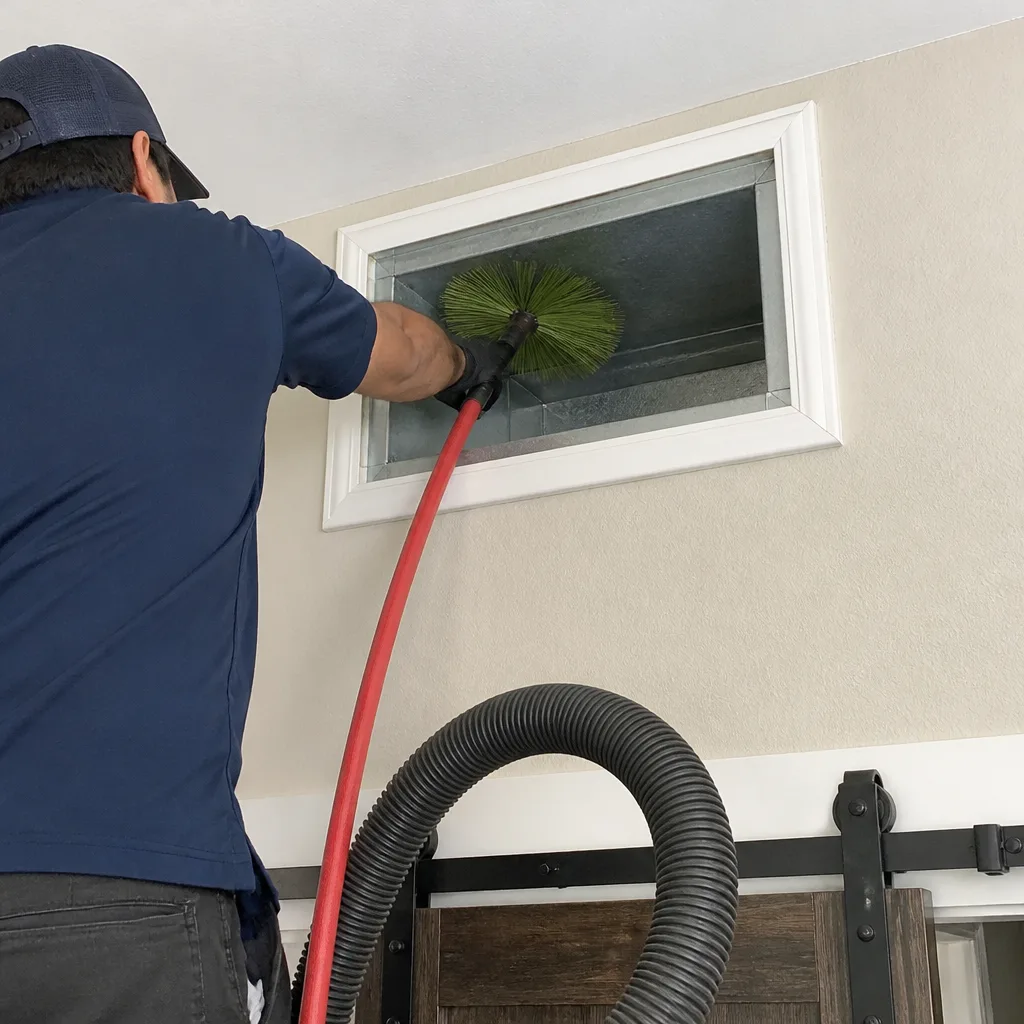
- Mechanical agitation. With suction running, the technician works through each duct branch using a rotary brush, compressed-air whip, or combination tool. On flex-duct systems, which are standard in Dallas attic installations, a rotary brush like the Rotobrush system works against the duct liner to scrub the surface. The loosened dust and film get pulled immediately into the negative-pressure airflow.
- Air handler and coil cleaning. The blower cabinet, blower wheel, evaporator coil, and drain pan should be part of the scope. If the coil is loaded with dust and the blower wheel is caked, cleaning only the ducts leaves the system moving dirty air across dirty components. This step takes extra time and is where low-price operators cut first.
- Filter and final inspection. The technician replaces or resets your filter, runs the system briefly, and does a post-job camera pass so you can see the result. If a company doesn’t offer before-and-after photos of your own ducts, ask what they’re trying to avoid showing you.
This process takes anywhere from three to six hours for a typical single-family Dallas home, depending on system size and how heavily loaded the ducts are. A company offering a full-system cleaning for a $99 special and a one-hour visit is not doing this process.
Negative-Air Extraction vs. Blow-and-Go: The Difference You Can’t Skip
If you only remember one technical term from this guide, make it negative-air extraction. It’s the difference between removing contaminants from your home and simply relocating them, and it’s the single most important question to ask any contractor before you book.
Negative-air extraction means a vacuum collection unit is connected to the duct system so the entire interior stays under suction while cleaning tools work inside. Think of it as the difference between vacuuming a rug with a working machine and sweeping a rug with a broom in a room with the windows closed: the vacuum captures the dust, the broom just moves it around. The collection unit should also have HEPA filtration on its exhaust, so the fine particles pulled from your ducts don’t get blown out the other side into your attic or driveway. Abatement Technologies builds the HEPA-filtered negative-air units used in hospital and containment cleaning; the same principle applies to your ducts.
Blow-and-go, by contrast, is what the low-cost operators do. They insert a compressed-air line or a flimsy brush into the registers, blow the debris loose, and then tell you it’s done. What they don’t tell you is that the loosened material settles back into the ducts within weeks, or gets pushed through the registers into your living space. The job looks done for the first hour, then the dust returns, and so does the allergy flare-up. Blow-and-go is cheaper because it’s faster and requires no real equipment, but it doesn’t clean your ducts. It just rearranges the dirt and charges you for the privilege.
In Dallas, blow-and-go is a particularly bad fit because of how much fine clay dust loads into the system. A surface pass with compressed air pushes that light, gritty powder straight through the register grilles and onto your furniture. We’ve walked into homes where the owner hired a $79 whole-house special, and there was a visible dust coat on every surface in the living room that evening. The ducts looked cleaner for about three days. The real contamination never left the house.
What a Legitimate Pre-Job Inspection Should Show You
A real duct-cleaning job starts before the price is confirmed, with a camera inspection. If a contractor quotes over the phone without looking inside your system, that number is a marketing lead, not a price. Here’s what a proper pre-job inspection should involve, and what you should see on the screen.
A camera pass through at least one supply register, one return register, and the air handler. The tech should snake the inspection camera into the duct and let you watch the feed live. You’re looking for dust cakes on the flex-duct liner, visible debris in return drops, evidence of moisture staining, and any separation at joints.
An honest read on what you’re seeing. Not every gray or black streak is mold. Some staining is just aged liner or dust film. A legitimate technician will tell you the difference and will not use the word “mold” as a scare tactic. If a tech waves a camera at a register, declares “mold,” and starts pushing a higher price, get a second opinion.
A check of the filter and return-air path. The filter slot, the return duct, and the blower cabinet are the lungs of the system. If the filter is caked and the return drop is loaded, the cleaning scope has to include the air handler, not just the branch ducts.
A written scope tied to what the camera showed. After the inspection, you should receive a written scope of work that lists exactly what will be cleaned: supply lines, return lines, air handler, coil, drain pan, registers. If the camera shows heavy loading but the scope only lists “duct cleaning,” ask for specifics before you sign anything.
The inspection is also your chance to assess the company itself. A technician who walks in with a camera, shows you the footage, and explains what needs to be done without pressure is working a different model than one who quotes a low number from the driveway and starts upselling at the door. The written price before work begins has to be just that: written, specific, and tied to what the inspection actually found.
How to Read a Written Scope of Work
The number on a duct-cleaning quote means nothing without the scope attached to it. In Dallas, where long attic flex-duct runs are standard and the air handler sits in a hot, humid environment, the scope is where cheap quotes fall apart. Here’s how to read one.
Look for explicit line items, not lump-sum descriptions. “Whole-house duct cleaning” is not a scope. “Supply duct runs, all rooms” is a line item. “Return duct runs, main return drop” is a line item. “Air handler blower cabinet, blower wheel, evaporator coil access” is a line item. If the quote is one line long, the contractor gets to decide what “cleaning” means after they’re already in your attic, and what it usually means is the registers and whatever else is easy to reach.
Check whether the air handler is included. This is the single most common omission in Dallas duct-cleaning quotes, and it matters more here than in cooler climates because Dallas systems run so many hours each year. The evaporator coil, blower wheel, and drain pan sit in the airstream full-time. If the scope covers only the branch ducts and skips the air handler, you’re paying to clean pipe while the fan pushes air across a dirty coil. Ask for the air handler to be listed explicitly.
Identify the cleaning method. The scope should state what tools will be used and how. “Rotary brush agitation with negative-air collection” is a method. “Compressed-air sweep” is a method, and a weaker one on flex duct. If the method isn’t written, the company gets to choose whatever’s fastest on the day.
Verify that the price is the price. A written scope with a fixed price means the number won’t change when the tech arrives and discovers your ducts are dirtier than average, which in Dallas they usually are. The Kingswell Way has always included a written price before any work begins, on every visit, with no exceptions. That’s the standard a legitimate company works to: the price is in your hands before a single vent is touched, and it doesn’t move at the door.
If the scope reads like a menu where every actual cleaning step costs extra, you’re looking at a bait-priced flyer, not a service. In our experience, the jobs where homeowners end up paying double the advertised price are almost always the ones where the scope was vague and the “special” was too good to be real.
How Often Dallas Homes Actually Need Their Ducts Cleaned
The national advice usually says to clean ducts every seven to ten years. In Dallas, that’s not the number that matches reality. Our runtime, dust load, and humidity cycle justify a different schedule, and applying a national average here leaves a Dallas family breathing years of accumulated contamination before they ever schedule a cleanout.
A reasonable baseline for a Dallas single-family home is every three to five years, adjusted up or down for specific conditions. Here’s how to think about it:
- Homes with pets, especially multiple indoor pets: clean every two to three years. Pet dander and hair bind to dust film in flex-duct liner and build up quickly.
- Homes in active construction or renovation: clean immediately after the project ends, then resume a normal schedule. Drywall dust and sawdust get pulled into returns the moment the HVAC fan cycles on.
- New-to-you homes: clean before move-in if the previous owner had pets, smoked, or left the system visibly dirty. You don’t inherit someone else’s dust.
- Homes where anyone has significant allergies or respiratory conditions: clean every two to three years, and pair it with better filtration between cleanings.
- Homes near active agricultural land, creek beds, or heavy pollen sources: Dallas’s northern and eastern suburbs sit close to farmland, and creeks create higher humidity and pest pressure. Two to three years is a safer interval.
- Homes in older Dallas neighborhoods with mature oaks and elms: tree pollen and leaf litter add an organic load that feeds mold with the right moisture. Three to four years is reasonable.
The best signal isn’t a calendar. It’s a quick look at the supply registers and a filter check. If you see dust streaks on the register grilles, visible debris on the inside of the register boot, or a filter that’s packed within a month of replacement, your ducts are carrying a heavy load. In Dallas, where the system runs eleven months a year, that load translates into real energy waste and real indoor air quality loss, not a cosmetic problem.
How Much Does Duct Cleaning Cost in Dallas?
Most Dallas single-family homes fall between $450 and $900 for a complete air duct cleaning that includes the supply lines, return lines, air handler, and coil access. Homes with two systems, which are common in Dallas’s larger suburban floor plans, run toward the top of that range or slightly above it. Smaller single-story homes and condos can come in under $450 if the system is compact and reasonably clean.
| Home Type | Typical System | Full-Cleaning Range |
|---|---|---|
| Condominium / small one-story | Single system, 6 – 10 registers | $350 – $500 |
| Typical Dallas suburban home | Single system, 10 – 16 registers | $450 – $700 |
| Large two-story / dual-system | Two systems, 16+ registers | $700 – $1,100 |
| Heavy contamination / post-renovation | Any size, significant debris load | $700 – $1,200 |
These are honest whole-system ranges, not per-vent teasers. Be suspicious of any “whole-house special” priced under $200 in Dallas, because the economics don’t work. A legitimate cleaning takes a crew of one or two technicians, three to six hours, and professional-grade equipment that costs tens of thousands of dollars. A $99 job cannot deliver the process described in this guide, and almost always turns into either a blow-and-go brush-off or a doorstep upsell to a much higher number once the “prep fee” and “material charge” get added.
The opposite problem exists too: companies that quote $2,000 for a system that needs $600 of work, usually by inflating the mold scare. The safeguard against both ends of the spectrum is the same: a written scope, tied to camera inspection, with a fixed price before work starts. For help choosing a provider, read our How to Hire a Air Duct Cleaning Contractor in Dallas: A Step-by-Step Guide. If the price is in writing and the scope lists what’s actually being cleaned, you can compare quotes on a real basis. Call (361) 314-5449 for a free estimate with a camera inspection and a fixed written price before anyone touches a vent.
The Dallas Humidity and Mold Window Most Schedules Miss
Dallas has a humidity pattern most cleaning guides ignore, and it creates a specific risk window that affects when you should schedule a cleaning. From roughly May through September, outdoor dew points sit above 65°F on most days, often climbing into the 70s. Inside your attic, where flex-duct runs live, temperatures can exceed 140°F, and the combination of hot exterior surfaces and moist air means condensation forms on the outside of ducts and, in some cases, inside them.
Inside a duct, condensation on a dust layer is the condition mold needs to grow. Mold doesn’t grow on clean metal; it grows on organic matter, and dust, pollen, and pet dander are organic matter. In Dallas, that means the inside of your ducts is a potential growth medium from late spring through early fall, especially in homes where the AC runs constantly and the duct interior temperature sits right at the dew point.
What should you do with that information? Two things. First, schedule cleanings before the humid window begins, in late winter or early spring, so your ducts start the hot season with minimal organic load. If mold can’t find a food source, the humidity alone won’t sprout it. Second, if you see moisture staining, darkened registers, or a musty odor that comes and goes with the AC, get an inspection in late spring or early summer when the humidity is high and the problem is most visible. Waiting until November means the mold has had five months to feed, and the visual evidence may have dried and faded by the time you look.
The same humidity window argues for better filtration between cleanings. Products like Aprilaire or Guardsman air cleaners and the right MERV-rated filter help capture the organic particles mold feeds on before they ever reach the duct interior. A Kestrel Air Duct Dallas home team can help you size the right filtration for your system at the same visit as a duct cleaning, so both problems get solved together.
Common Mistakes to Avoid
- Hiring on price alone. In Dallas, the cheap operators run heavy on social ads, and the complaint pattern is consistent: a $79 special becomes $700, or the “cleaning” is a register-level wipe-down. If a price looks too low to support three to six hours of labor with real equipment, it is.
- Assuming the price includes everything. A “whole-house cleaning” quote that doesn’t list supply lines, return lines, and the air handler as separate line items leaves the contractor free to skip the expensive parts. Ask for the scope in writing.
- Skipping the camera inspection. No camera, no proof. If a company won’t show you the inside of your ducts before quoting, you’re signing up for a guess, and in Dallas, that guess usually underestimates the clay-dust load in the system.
- Cleaning on a national schedule. The seven-to-ten-year national average doesn’t fit Dallas’s eleven-month runtime and heavy dust load. Most local homes need service every three to five years, more often with pets or allergies.
- Ignoring the dryer vent. The lint-clogged dryer vent is a fire hazard and an air-quality problem all by itself, and it usually needs service more often than the ducts. A dryer vent cleaning in Dallas should be considered alongside any duct work.
- Using duct cleaning as a substitute for filter maintenance. A clean system gets dirty again within months if the filter is cheap and unchanged. In Dallas’s dusty air, a quality filter is the difference between a three-year cleaning interval and a one-year one.
- Believing a guarantee that isn’t written. Verbal assurances die at the invoice. The guarantee that matters is the one printed on your paperwork, with a defined scope and a defined make-it-right process. If a company won’t put it in writing, it doesn’t exist.
When to Call a Professional
You should call a professional when the evidence is visible and persistent: dust streaking from registers, a filter that loads up within weeks, a musty smell when the AC kicks on, or allergy symptoms that spike indoors and ease outside. For more guides & resources on maintaining your home’s air quality, visit our blog. You should also call immediately after any renovation, before move-in to a previously owned home, or if you can see debris inside a register boot with a flashlight. In a Dallas attic, flex-duct systems are labor-intensive to clean properly; this is not a DIY weekend with a shop vacuum and a brush. Kestrel Air Duct Dallas offers free estimates in Dallas, with camera inspection included and a fixed written price before any work begins. Call (361) 314-5449 to schedule.
Frequently Asked Questions
Most Dallas homes pay between $450 and $900 for a full system cleaning that includes the supply lines, return lines, and air handler access. Larger two-system homes and homes with heavy post-renovation debris can run up to $1,100 or more, while small condos and single-story homes sometimes come in under $450. Call (361) 314-5449 for a free estimate with a camera inspection so the quote reflects your actual system, not a national average.
Cheap quotes usually reflect a blow-and-go method that skips negative-air collection, skips the air handler, and spends less than an hour in the house. The dust gets loosened and pushed into the living space or left to resettle, and the job doesn’t hold. In Dallas, where clay-dust loads are heavy and humidity turns dust into a baked-on film, that shortcut is especially visible within weeks.
Demand before-and-after camera footage of your own ducts, not stock photos. A legitimate cleaning includes a post-job camera pass that shows the same duct sections you saw during the pre-job inspection, visibly cleaner. The written scope should also list the specific system components cleaned, so you can hold the company to the line items. The 365-Day Done Right Promise from Kestrel means if the work falls short within a year, the return visit is free and the promise is in writing.
Every three to five years for most Dallas homes is a more accurate interval than the national seven-to-ten-year guideline, because Dallas systems run eleven months a year and the local dust load is heavier. Homes with multiple pets, allergy sufferers, or recent renovation work may need cleaning every two to three years. Call (361) 314-5449 and our team can help you set a schedule based on what the camera inspection shows.
Duct cleaning removes the organic material mold feeds on, which is the part of the problem you can control; the humidity itself is a Dallas climate condition. Scheduling cleanings before the humid season, from late winter through early spring, gives mold less food when the dew points climb. If you already see dark staining or smell must, an inspection during the summer humidity window when the evidence is most visible is the better move.
New construction in Dallas frequently leaves drywall dust, wood shavings, and other debris inside the duct system, because builders run the HVAC during construction and the ducts catch everything. A new-to-you home should get a camera inspection before you assume it’s clean, especially if the previous owner had pets or the home sat vacant during Dallas’s hot humid months.
The Bottom Line
Dallas ducts are not a national-average problem, and they don’t respond well to national-average advice. The clay dust, the Bermuda-grass pollen, the eleven-month runtime, and the summer humidity window all work together to load your system faster and pack it tighter than a four-season climate ever would. The solution is a cleaning that uses negative-air extraction with real mechanical agitation, covers the air handler and return lines, starts with a camera inspection, and ends with before-and-after proof. The price for that work in Dallas sits between $450 and $900 for most homes, and the guarantee that stands behind it should be in writing. Kestrel Air Duct Dallas operates under the Kingswell Guarantee: a written price before work begins, a defined arrival window, a clean job site, and a 365-Day Done Right Promise on every job. If it’s not done right, we come back and make it right at no charge. Call (361) 314-5449 for a free estimate and a straight answer about what’s actually in your ducts.
Written by Dale Whitmore, Owner at Kestrel Air Duct Dallas, serving Dallas since 2004.
See the difference
 Before
 After
After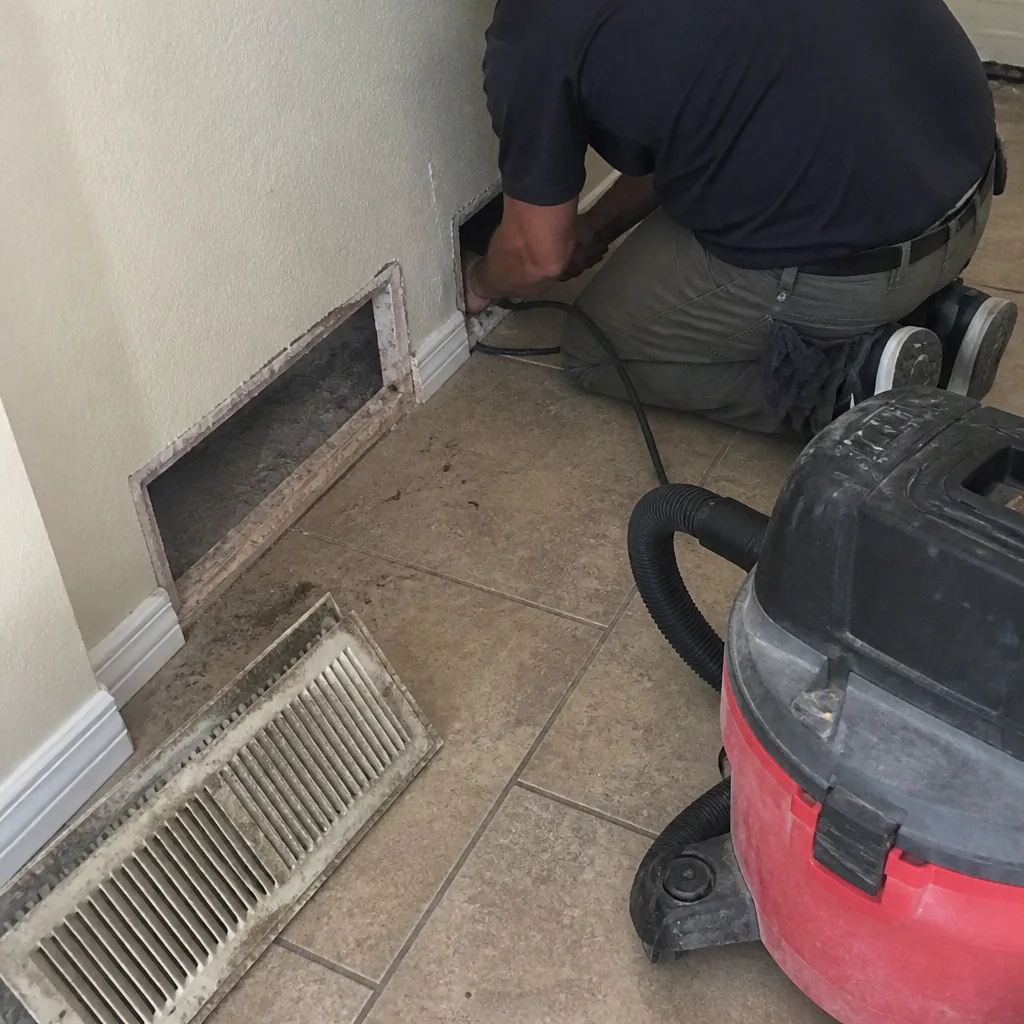 Before
 After
After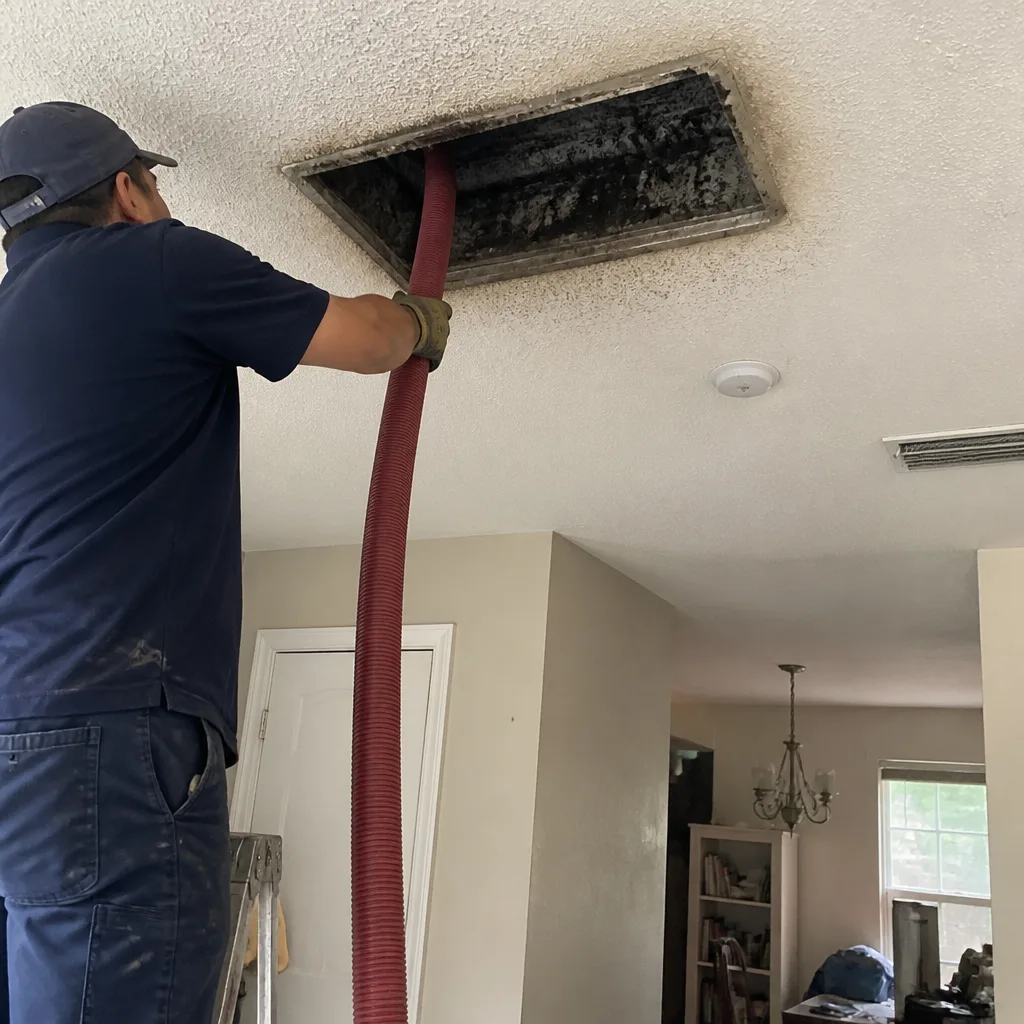 Before
 After
After