
Last updated October 15, 2026
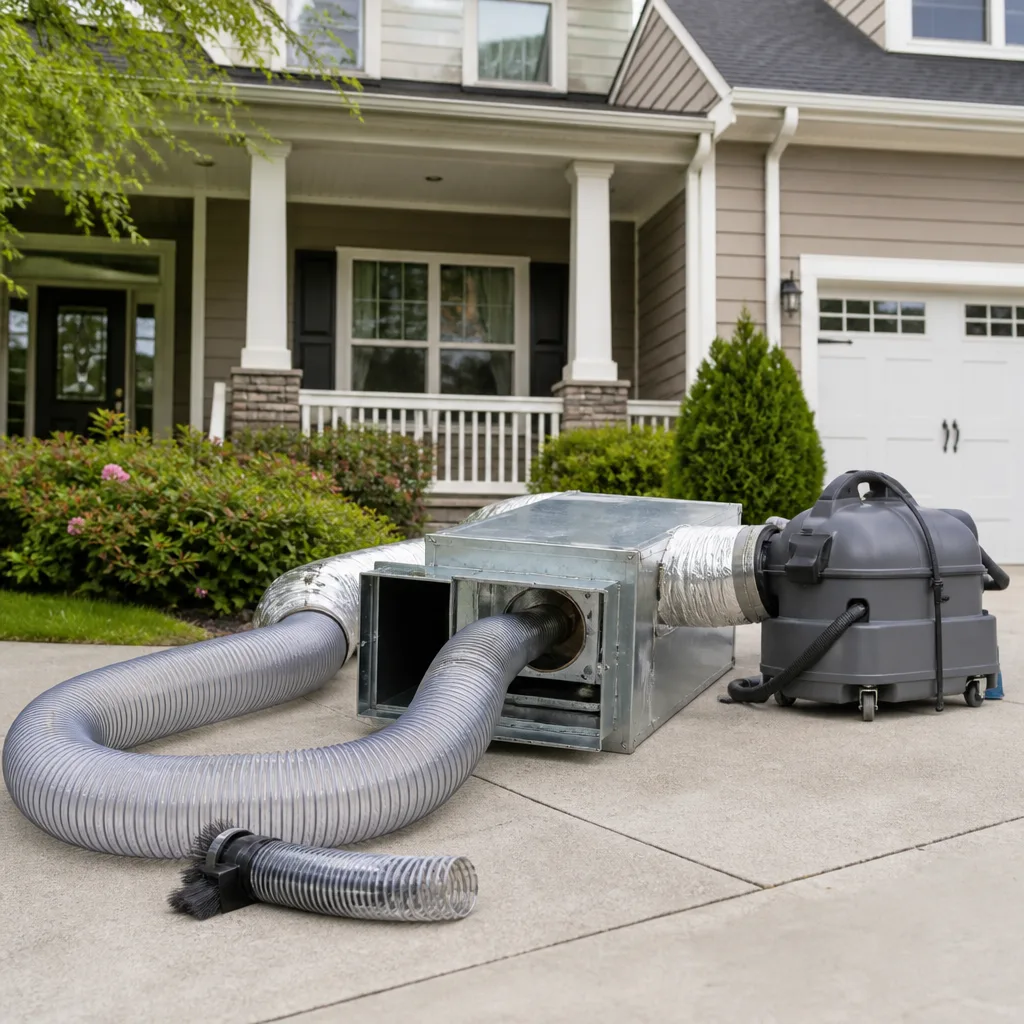 Whole-home duct cleaning
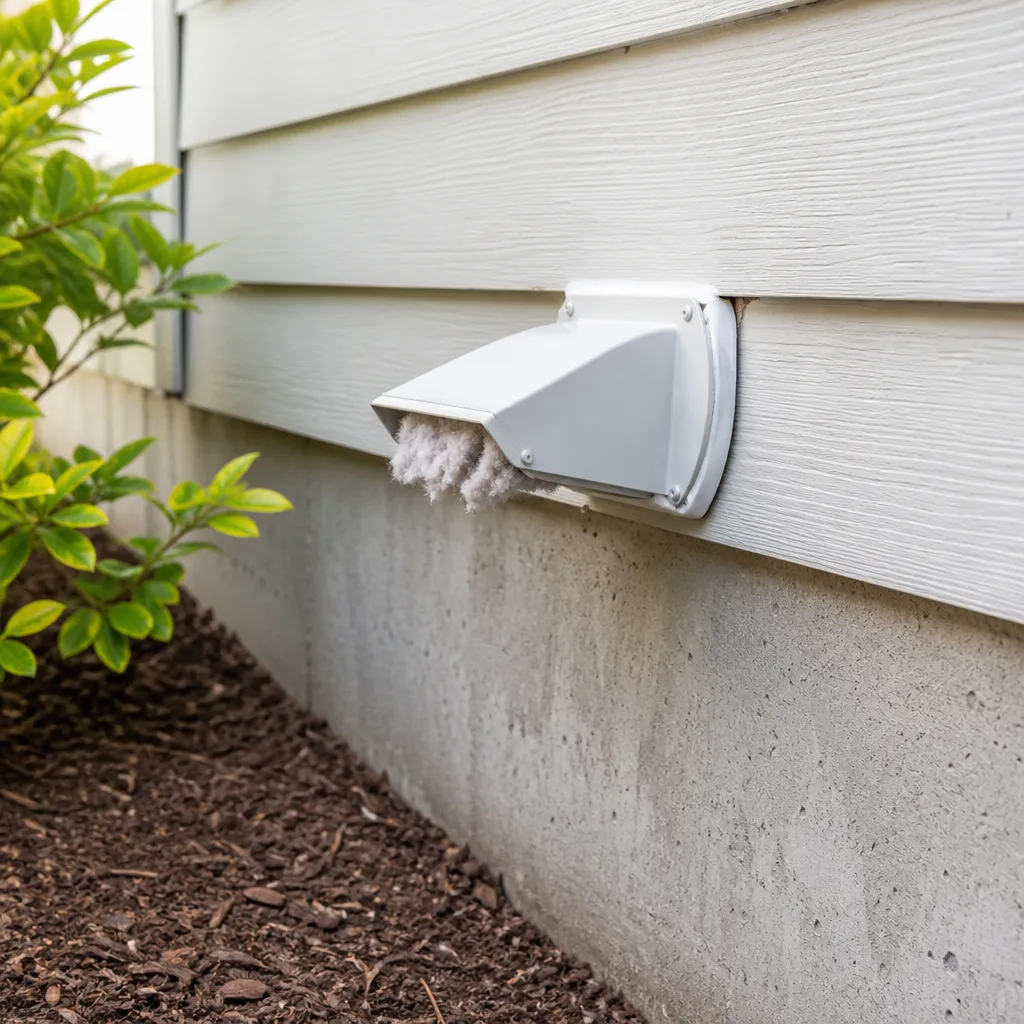 Dryer vent cleaning
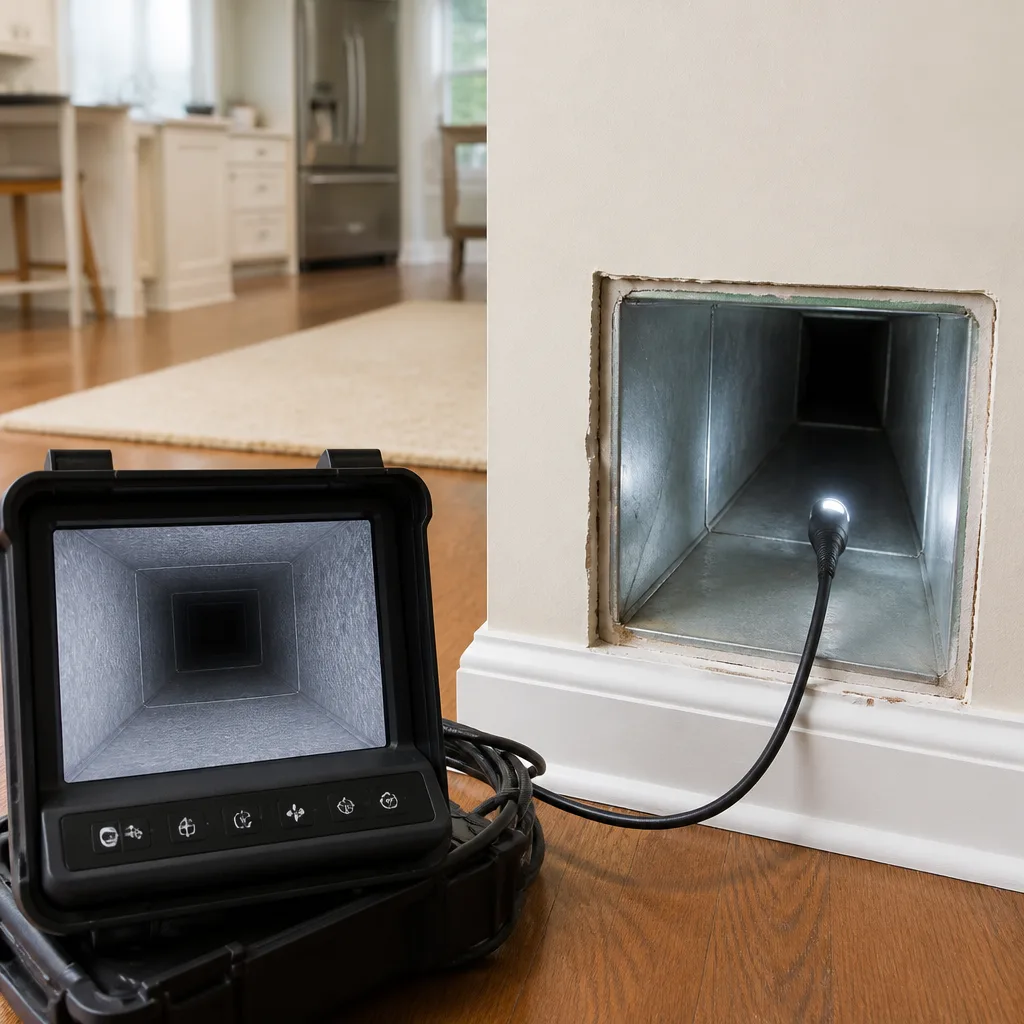 Camera inspection
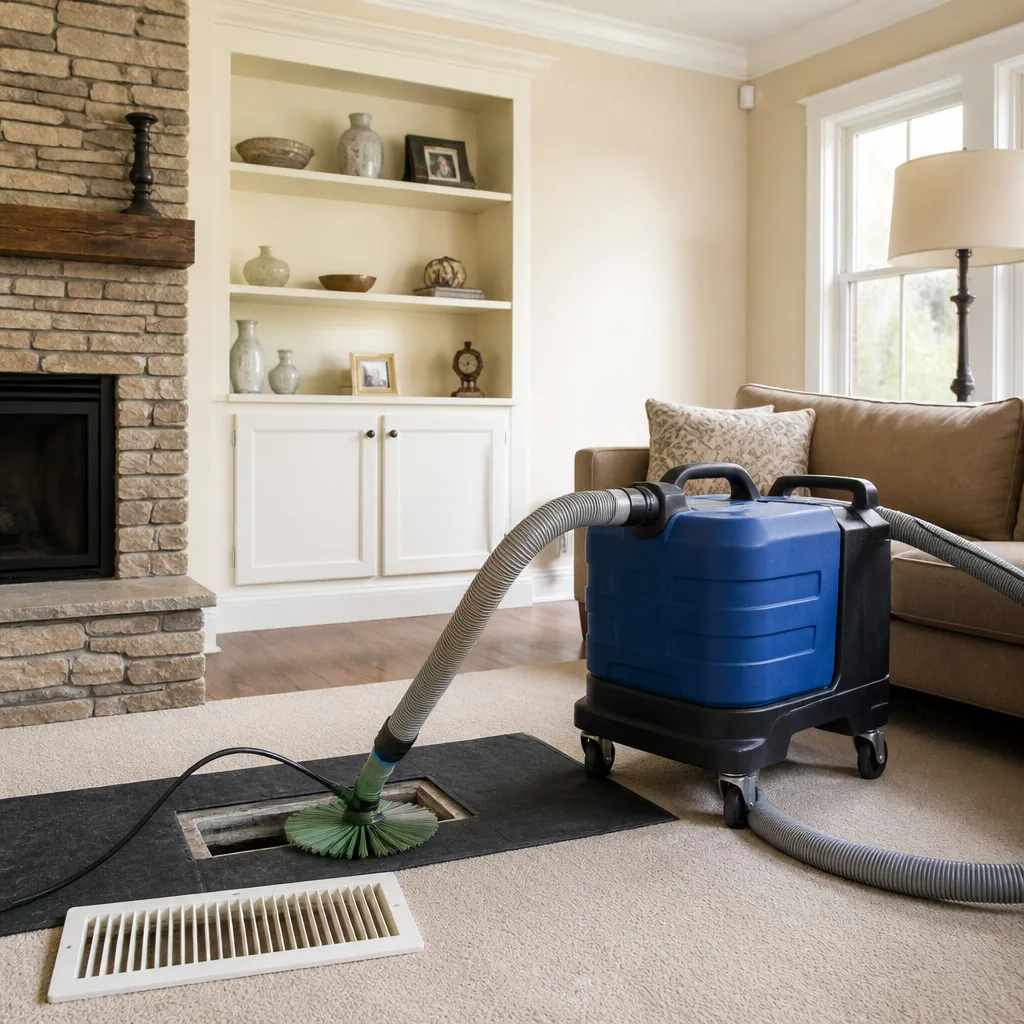 Sanitizing & deodorizing
Whole-system duct and dryer vent check with before-and-after photos - you see exactly what came out of your vents
That "$99 whole-house special" is a bait ad - the real number appears once they are in your hallway, or the "clean" is a shop-vac at the register. We photograph the inside of your ducts before and after instead.
Air Duct Cleaning Permits, Codes & Inspections in TX: What You Need to Know
Most Dallas homeowners assume that if a contractor shows up with a van and a vacuum, the work is legal. That assumption holds for basic air duct cleaning in Texas, but it falls apart the moment the job expands into mold removal, duct board replacement, or liner repair. Texas draws a hard regulatory line between cleaning and construction, and knowing where that line sits can save you from hiring an unlicensed contractor who crosses it without telling you. This guide-along with The Complete Guide to Air Duct Cleaning in Dallas-lays out exactly which permits, licenses, and code requirements apply to air duct work in Dallas and across Texas, and what to ask before anyone touches your system.
Quick Answer
Air duct cleaning itself requires no permit and no state license in Texas, so our Air Duct Cleaning services and other straightforward cleaning jobs in Dallas are unregulated at the state level. But if the tech finds mold and recommends remediation, or if the job turns into duct repair or replacement, Texas licensing laws under TDLR and the Texas Occupations Code kick in immediately. A written scope of work that separates cleaning from regulated work is the single best protection a Dallas homeowner can have before the job starts.
Styles & brands we work with
Table of Contents
- Where Cleaning Ends and Regulated Work Begins
- Texas TDLR Mold Remediation Rules for Duct Systems
- Texas HVAC Contractor Licensing Under Occupations Code Chapter 1302
- Dallas City Code and Residential Ductwork
- Why a Written Scope of Work Protects You
- Documentation to Request Before Work Starts
- The Role of Inspections in Texas Duct Work
- Common Mistakes to Avoid
- When to Call a Professional
- Frequently Asked Questions
Where Cleaning Ends and Regulated Work Begins
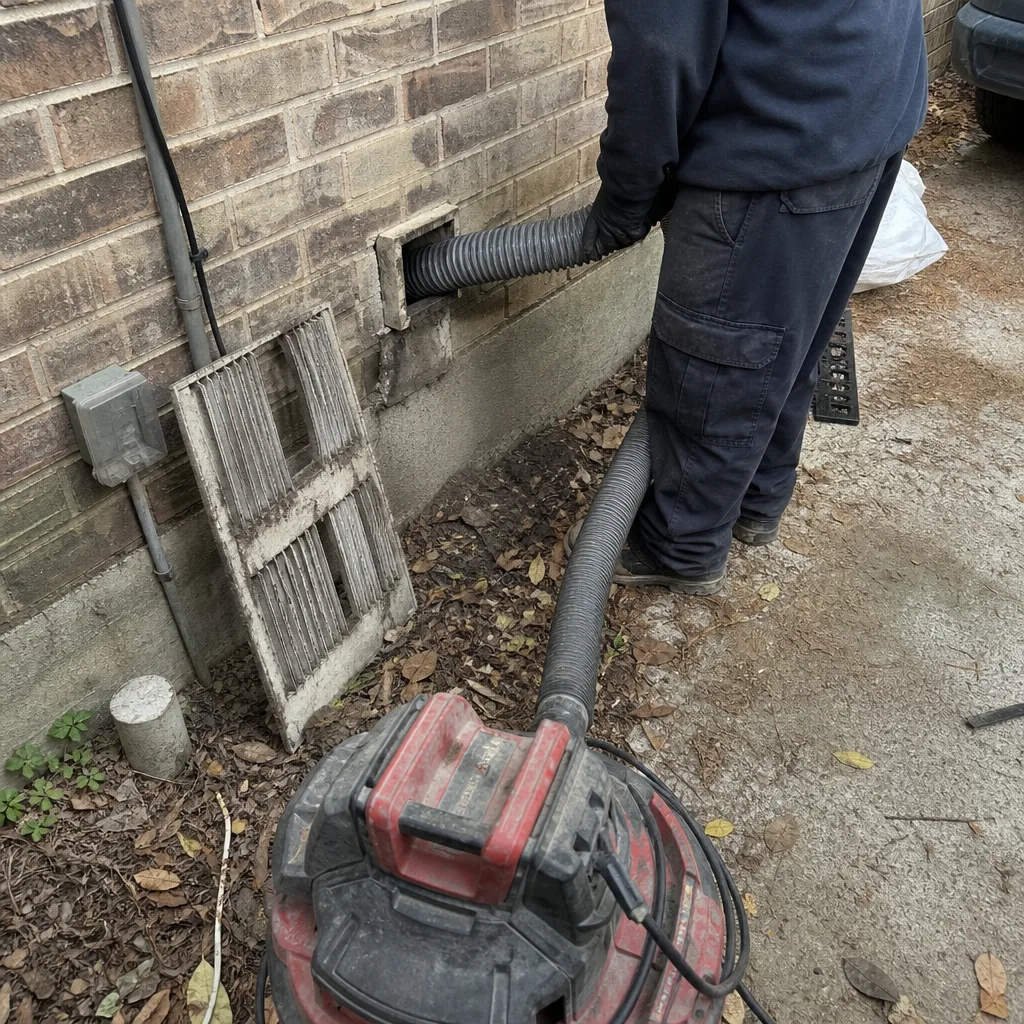
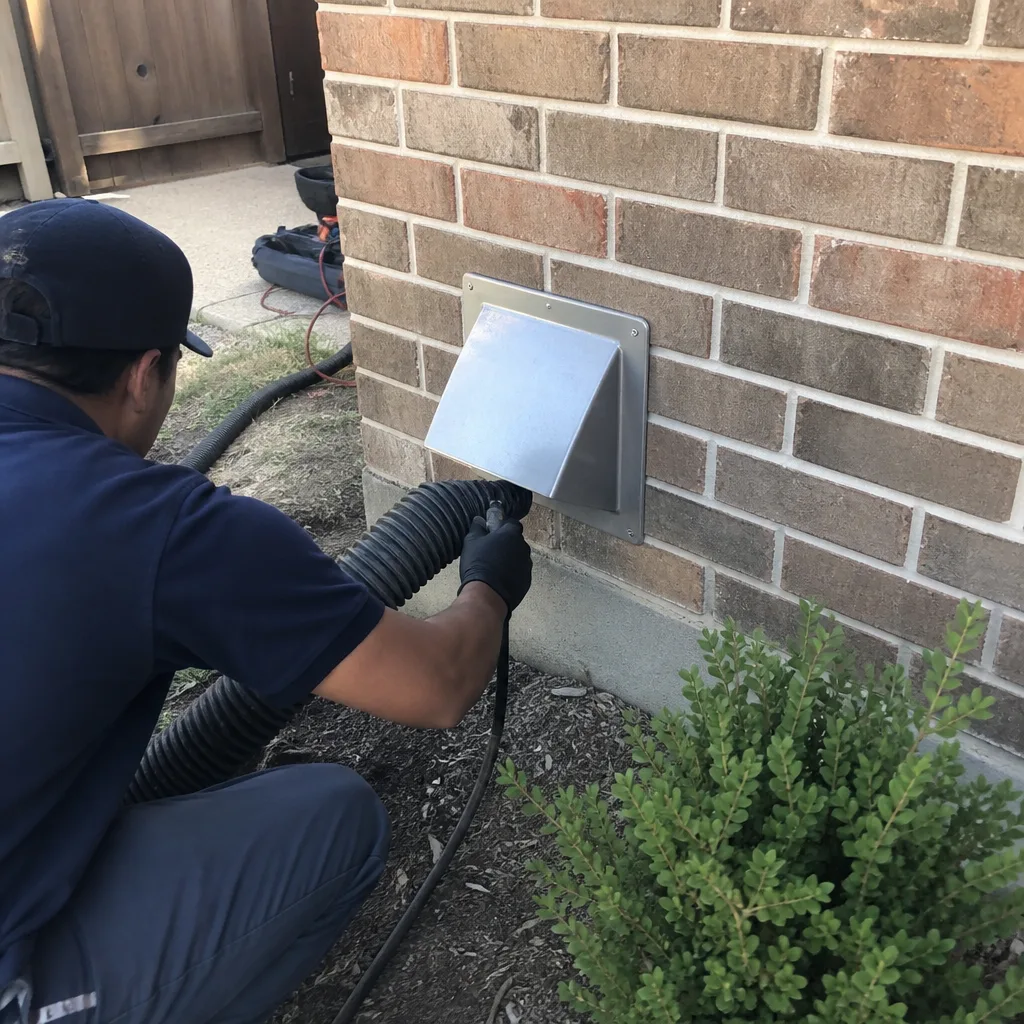
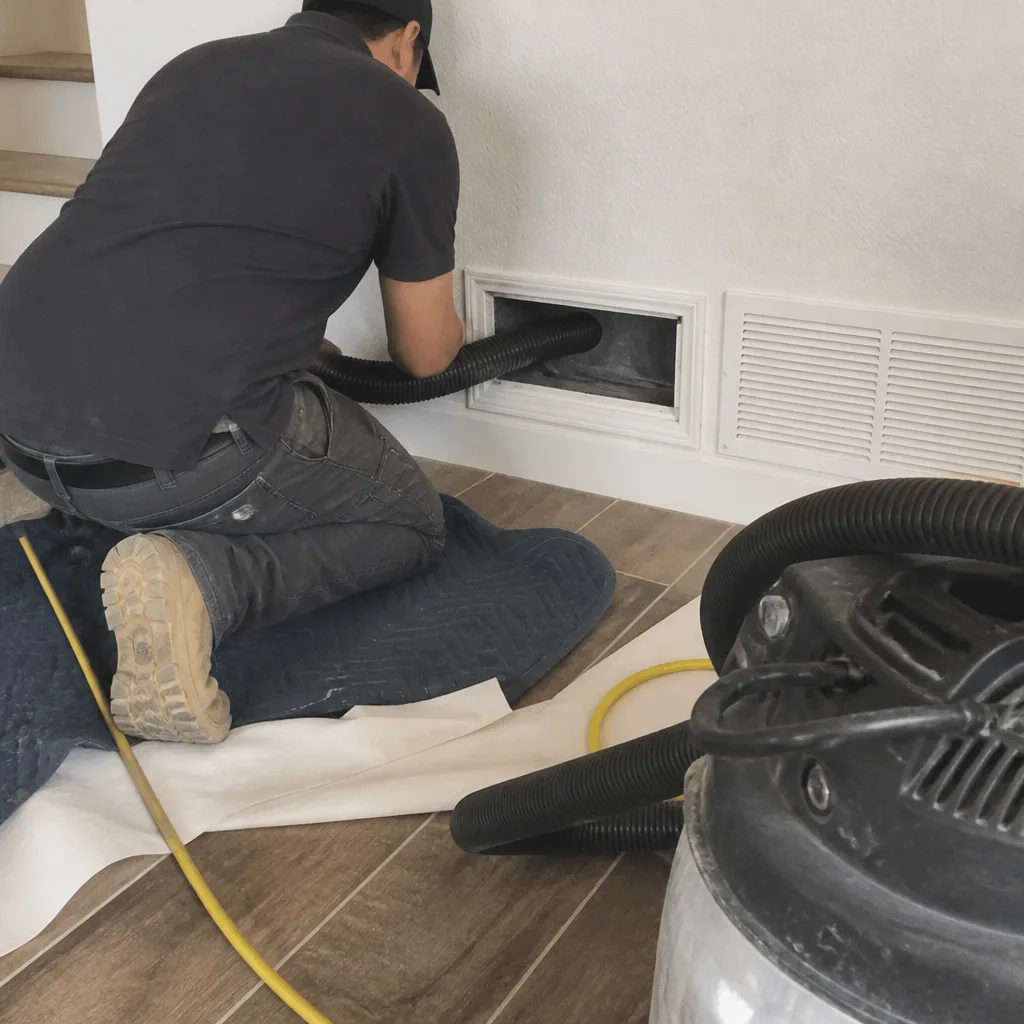
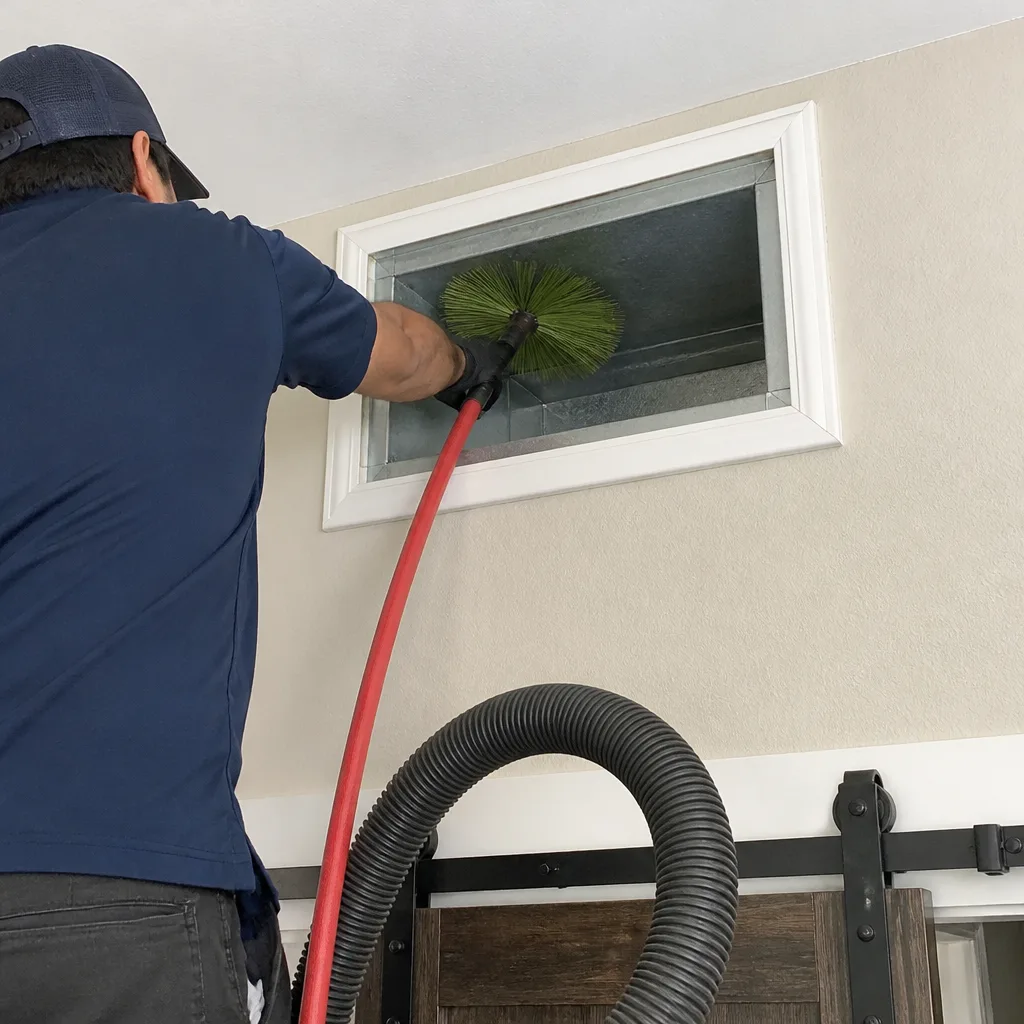
Air duct cleaning is defined in Texas as the removal of dust, debris, and contaminants from the interior surfaces of ductwork using mechanical agitation, negative air pressure, or both. No permit is required for this activity anywhere in the state, and no Texas license specifically covers “duct cleaner” as a title. We do this work in Dallas every week with professional air duct cleaning equipment that includes Rotobrush rotary brush systems, which spin bristles against duct walls to knock debris loose, and Nikro negative-pressure units that pull loosened particles out of the system rather than blowing them into your living room. That is cleaning. It is unregulated at the state level, and no Dallas city inspector will ask to see a permit for it.
The line moves the moment a technician recommends any of the following:
- Mold remediation – removing mold from duct interiors, insulation, or adjacent wall cavities
- Duct board replacement – cutting out and replacing sections of fiberglass duct board
- Liner repair or replacement – installing new interior liners inside existing metal ducts
- Duct modification – adding, removing, or rerouting duct runs
- Insulation removal or replacement – disturbing existing insulation on or around ductwork
- Air handler or coil cleaning that requires opening the unit – work that crosses into HVAC service territory
Each of these activities triggers a Texas licensing requirement, a permit requirement, or both. A contractor who performs them without the right credentials is operating illegally, and if the work is later discovered during a home sale inspection, the homeowner bears the cost of fixing it. This is not a theoretical concern in Dallas. We have been called to follow up on jobs where a “cleaning” turned into an unpermitted duct modification, and the homeowner had no paperwork showing who did what.
Texas TDLR Mold Remediation Rules for Duct Systems
The Texas Department of Licensing and Regulation (TDLR) administers the state’s mold assessment and remediation rules under Title 16, Part 4, Chapter 78 of the Texas Administrative Code. Any person or company that performs mold remediation in Texas must hold a Mold Remediation Contractor license issued by TDLR. That is a hard requirement, and it applies regardless of whether the mold is in a bathroom, a crawlspace, or inside an air duct.
Here is the threshold that matters for Dallas homeowners: TDLR defines mold remediation work as the removal, cleaning, sanitization, or demolition of mold exceeding 25 contiguous square feet of visible mold growth. A residential duct system can exceed that threshold quickly. A main trunk line running 20 feet with visible mold on both interior walls can easily present 25 square feet or more of affected surface area. Add in branch runs, and a duct system with what looks like “a little mold” may cross into regulated remediation territory without the homeowner realizing it.
Here is what a TDLR-licensed mold remediation contractor must do, and what an unlicensed duct cleaner skipping these steps does not:
- Conduct or commission a mold assessment by a licensed Mold Assessment Consultant or Technician before starting remediation
- Develop a mold remediation protocol based on that assessment
- Prepare a work plan that describes containment procedures, cleaning methods, and post-remediation verification
- Provide written notice to the property owner of the scope of work, including the mold assessment findings
- Perform post-remediation verification to confirm the mold has been addressed
An unlicensed contractor performing mold work inside ducts faces administrative penalties from TDLR, and the homeowner may be left with an incomplete or unsafe remediation. If you are in Dallas and a duct cleaning tech tells you there is mold in your system and offers to “take care of it” as part of the cleaning, ask for their TDLR Mold Remediation Contractor license number. If they cannot provide one, the work they are offering is illegal. Full stop. You can verify a license at the TDLR website under their license search tool.
Texas HVAC Contractor Licensing Under Occupations Code Chapter 1302
Texas Occupations Code Chapter 1302 requires anyone who performs “air conditioning and refrigeration contracting” to hold a Texas Air Conditioning and Refrigeration Contractor license issued by TDLR. That definition covers the installation, repair, and replacement of HVAC systems, including ductwork. The key phrase in the statute is “the design, installation, construction, maintenance, service, repair, alteration, or modification of a product or equipment” in an air conditioning system.
Cleaning the interior of an existing duct is not, by itself, contracting. But the following activities are:
- Cutting into existing ductwork to add a new supply or return register
- Replacing a section of damaged duct with new material
- Installing flexible duct runs to a new area of the home
- Sealing duct joints with mastic as a repair, where the scope goes beyond routine cleaning
- Replacing registers, grilles, or diffusers in a way that modifies the system
- Repairing or replacing sheet metal plenums
In Dallas, we see this issue most often when a homeowner calls for air duct cleaning in Dallas and the technician discovers a collapsed flex run or a disconnected joint. The honest response is to recommend a licensed HVAC contractor for the repair. The less honest response is to pull out a roll of tape and “fix” it on the spot. The difference matters because an unlicensed modification can void equipment warranties, create code violations, and surface as a red flag during a future home inspection in Dallas.
TDLR issues HVAC contractor licenses under three classifications: Class A (unrestricted, any size system), Class B (heating and cooling systems up to 25 tons), and Class A or B with an Environmental Air endorsement. Homeowners should not need to know the class distinctions, but they should know this: any contractor modifying ductwork must be able to show a TDLR-issued license number, and that number should be verifiable online. Asking for the license number is not rude. It is the minimum due diligence.
Dallas City Code and Residential Ductwork
The City of Dallas adopts the International Mechanical Code (IMC) and the International Residential Code (IRC) with local amendments, and it enforces those codes through the Dallas Development Services Department. Anyone doing permitted mechanical work in Dallas – which includes most duct modification, repair, and replacement – must file a permit application, pay the associated fees, and schedule inspections with a city inspector.
Dallas code provisions that affect residential ductwork include:
- Permit requirements for mechanical work – Dallas requires a mechanical permit for work that alters or adds to a residential HVAC system beyond minor, non-structural replacement of like-for-like components
- Duct insulation requirements – Dallas enforces energy code provisions that require duct insulation to meet minimum R-values, typically R-8 for ducts in unconditioned attics, and disturbing that insulation during a cleaning that expands into repair means the repair must leave the insulation compliant
- Duct sealing standards – Dallas code requires that duct connections be sealed with approved materials, and unlicensed tape jobs that fail this standard are a common cause of failed mechanical inspections
- Existing insulation disturbance – Dallas has adopted provisions related to asbestos and other hazardous materials in older structures, and disturbing insulation in a pre-1980 Dallas home can trigger additional requirements if that insulation tests positive for asbestos
The practical takeaway for a Dallas homeowner is this: if the job is cleaning only, no city permit is required and no inspector will visit. If the job turns into any form of duct repair, liner replacement, or modification, a mechanical permit is likely required, and the contractor performing the work must be licensed. A cleaning-only company that starts cutting and patching is operating outside both state licensing law and Dallas code.
Why a Written Scope of Work Protects You
A written scope of work is the single most effective tool a Dallas homeowner has to prevent unlicensed work from being performed under the cover of a cleaning job. The scope should be written before the job starts, it should be specific about what will be done, and it should explicitly state what will NOT be done.
Here is why this matters in practice. Suppose a tech performs a cleaning and, while inspecting, finds a two-foot section of flex duct that is crushed. They “fix” it by taping it back into shape. Six months later, the home goes under contract, and the buyer’s inspector flags a non-code-compliant duct repair. The seller now has to bring in a licensed HVAC contractor to correct it, and the cost is the seller’s. If the original scope of work said “cleaning only” and the repair was not authorized in writing, the seller has a much stronger position in any dispute. If the scope was vague, or if no scope existed, the seller has very little.
We operate under the Kingswell Guarantee at Kestrel Air Duct Dallas home, which means every customer in Dallas receives a written price and a written scope before a single vent is touched. That written document states plainly what the crew will do and what it will not do. If we find a repair issue during a cleaning, we document it, we photograph it, and we refer the homeowner to a licensed HVAC contractor. We do not perform the repair ourselves, because we are a cleaning company, not an HVAC contractor, and Texas law draws that line the same way we do.
A proper scope of work should include:
- The address and date of the proposed work
- A description of the cleaning method – for example, rotary brush agitation with negative-air extraction
- A list of what will be cleaned – supply ducts, return ducts, registers, the main trunk line, the air handler
- A list of what will NOT be done – repairs, modifications, mold remediation, insulation replacement
- The total price, stated as a fixed amount for the described scope
- A statement of any guarantee and what it covers
- The company’s name, address, and any license numbers
If a contractor refuses to provide a written scope, that is a red flag in and of itself. No legitimate company in Dallas has a reason to refuse a written description of the work it is being paid to perform.
Documentation to Request Before Work Starts
Before any air duct cleaning work begins in your Dallas home, there are four documents worth requesting. None of them is unusual, and all of them take a legitimate contractor less than five minutes to provide.
1. Proof of insurance. Ask for a certificate of insurance that names the company and shows general liability coverage. A company that carries insurance will provide this without hesitation. A company that does not will stall, deflect, or change the subject. In Dallas, where many homes are on pier and beam or slab foundations with ductwork in tight crawlspaces, liability exposure is real, and you want the company’s insurer on the line, not your own.
2. The company’s Texas license number, if one applies. For cleaning-only work, no license is required, so this request may not apply. But if the scope includes any mold remediation or duct repair, the company must hold the appropriate TDLR license, and that number should be verifiable on the TDLR website. A company that claims a license but cannot produce the number is lying to you.
3. A written scope of work. We covered this in the previous section, and it bears repeating. The scope is your evidence that the work you authorized matches the work that was performed.
4. A written price. The price should be fixed for the described scope, and it should be in writing before the crew arrives. Texas does not require this by law, but it is the clear marker of a company that has nothing to hide. Our dryer vent cleaning in Dallas and air duct cleaning services both operate this way – the written price is in the customer’s hands before work begins, every time, with no exceptions.
If a contractor refuses any of these requests, the appropriate response is to end the conversation and call someone else. Dallas has many legitimate air duct cleaning companies. None of them will refuse a documentation request.
The Role of Inspections in Texas Duct Work
Texas does not require a city inspection for air duct cleaning, and no inspector will visit your Dallas home after a cleaning is complete. That changes when the work crosses into regulated territory. A permitted duct modification or repair in Dallas typically requires a rough inspection before the work is concealed and a final inspection after it is complete. The inspector checks that the work complies with the adopted mechanical code, the energy code, and any other applicable Dallas amendments.
What does an inspector look at on a permitted duct job? In our experience working alongside licensed HVAC contractors in Dallas, the common inspection points include:
- Duct support – whether the duct is properly supported at required intervals, typically every four to five feet for flexible duct
- Sealing – whether all joints and connections are sealed with approved mastic or tape designed for duct use
- Insulation – whether insulation meets the required R-value and is installed without compression
- Sizing – whether the modified duct is correctly sized for the system’s airflow requirements
- Clearances – whether the duct maintains required clearances from combustibles
- Penetrations – whether any wall, floor, or ceiling penetrations are properly fire-stopped
For a cleaning-only job, none of this applies, and that is why the distinction between cleaning and modification matters so much. A company that performs unpermitted modifications has created a situation where no inspector ever reviewed the work, and the homeowner may not discover the problem until a future home sale inspection in Dallas brings it to light.
Common Mistakes to Avoid
- Letting a cleaner “fix” a duct problem on the spot. Duct repair and modification require an HVAC contractor license in Texas. A cleaning tech who offers to replace a crushed flex run is offering to perform unlicensed work. Politely decline and call a licensed contractor.
- Accepting mold remediation from a cleaning company without a TDLR license. Mold removal inside ducts often exceeds the 25-square-foot threshold. Without a TDLR Mold Remediation Contractor license, the work is illegal, and the homeowner is the one exposed.
- Failing to get a written scope before work starts. Without it, you have no evidence of what was agreed to. After the work is done and a problem surfaces, that evidence gap works against you.
- Assuming a permit is always required. Many Dallas homeowners overcorrect and assume any duct work needs a city permit. Cleaning does not. Knowing the difference prevents you from being upsold on “permit fees” for a job that requires no permit.
- Trusting a license claim without verifying it. Anyone can say they are licensed. TDLR maintains a free online license search. Use it. A legitimate licensed contractor will never be offended by verification.
- Ignoring the guarantee terms. Many companies promise workmanship guarantees with no written terms. If the guarantee is not in writing, it does not exist. Ask for the terms, including what qualifies and how to invoke them.
- Confusing cleaning with sanitizing. Some companies claim to “sanitize” ducts during a cleaning, which can imply antimicrobial treatment that borders on remediation territory. Ask exactly what chemical is being applied and whether it is registered for that use. If the answer is vague, something is off.
When to Call a Professional
If your ducts have not been cleaned in several years, if you have visible dust on register grilles, or if your home smells dusty when the system runs, a professional cleaning is the place to start; see Air Duct Cleaning Warning Signs: A Dallas Homeowner’s Reference Guide for additional guidance. In Dallas, where summers push air conditioning systems to run constantly for months on end, duct cleaning every three to five years is a reasonable interval for most homes, and more often if you have pets, recent renovation dust, or household members with allergies.
If you have a suspected mold issue, a collapsed or disconnected duct run, or a system that needs repair, the professional you call should be the right one for the job. For cleaning, Kestrel Air Duct Dallas offers free estimates in Dallas – call (361) 314-5449. For repair work, we will refer you to a licensed HVAC contractor, because Texas law and good sense both require it.
Frequently Asked Questions
No. Air duct cleaning is not a permit-requiring activity anywhere in Texas, including Dallas. A cleaning-only job involves no structural modification, no mechanical alteration, and no code-triggering work, so no city permit is required and no inspection will be scheduled. If a contractor tells you a permit is needed for a straightforward cleaning, ask them to show you the code section that requires it. Call (361) 314-5449 for a free estimate on a cleaning-only job with a written scope and price.
A TDLR license is required when the job crosses from cleaning into regulated work: mold remediation over 25 contiguous square feet requires a Mold Remediation Contractor license, and duct repair or modification requires a Texas Air Conditioning and Refrigeration Contractor license under Occupations Code Chapter 1302. The company performing the regulated work must hold the appropriate license, and you should verify that license on the TDLR website before the work starts.
Visit the TDLR website and use their public license search tool. Enter the contractor’s name or license number, and confirm that the license is active and matches the work being proposed. For mold remediation, look for the Mold Remediation Contractor designation. For duct repair, look for an Air Conditioning and Refrigeration Contractor license. If the license cannot be verified, do not proceed.
TDLR rules require a licensed mold remediation contractor for any work that involves more than 25 contiguous square feet of visible mold. A Dallas duct system can exceed this threshold quickly, because the inside surface area of a main trunk line and branch runs adds up faster than most homeowners realize. If a tech finds mold and recommends removal, ask whether the affected area exceeds 25 square feet and whether the company holds a TDLR remediation license.
No. The City of Dallas does not inspect air duct cleaning work, because cleaning is not regulated work under the adopted mechanical code. Inspections apply only to permitted work, such as duct modification, repair, or replacement. If those activities are part of your job, the licensed contractor performing them must pull the permit and schedule the inspection.
The first step is to document the finding with photos and the inspector’s written report. Next, obtain a written estimate from a licensed HVAC contractor to correct the work. If you have the original scope of work showing that the work was performed by an unlicensed company, you may have grounds for a claim against that company. If you do not have a written scope, your options are more limited. This is why a written scope before any work starts is non-negotiable. Call (361) 314-5449 if you need a second opinion on a Dallas duct system before a sale.
The Bottom Line
Air duct cleaning in Texas is unregulated work that requires no permit and no license, so a cleaning-only job in Dallas is straightforward. But the moment a job shifts into mold remediation or duct repair, Texas licensing requirements, Dallas code provisions, and permit obligations come into play. A written scope of work that separates cleaning from regulated work is the homeowner’s best protection, along with verifying any claimed TDLR license and requesting proof of insurance before the crew arrives. Kestrel Air Duct Dallas provides written pricing and a written scope on every job, under the 365-Day Done Right Promise and the Kingswell Guarantee, and we refer repair and remediation work to properly licensed contractors every time. For more guides & resources, visit our blog.
Written by Dale Whitmore, Owner at Kestrel Air Duct Dallas, serving Dallas since 2004.
See the difference
 Before
 After
After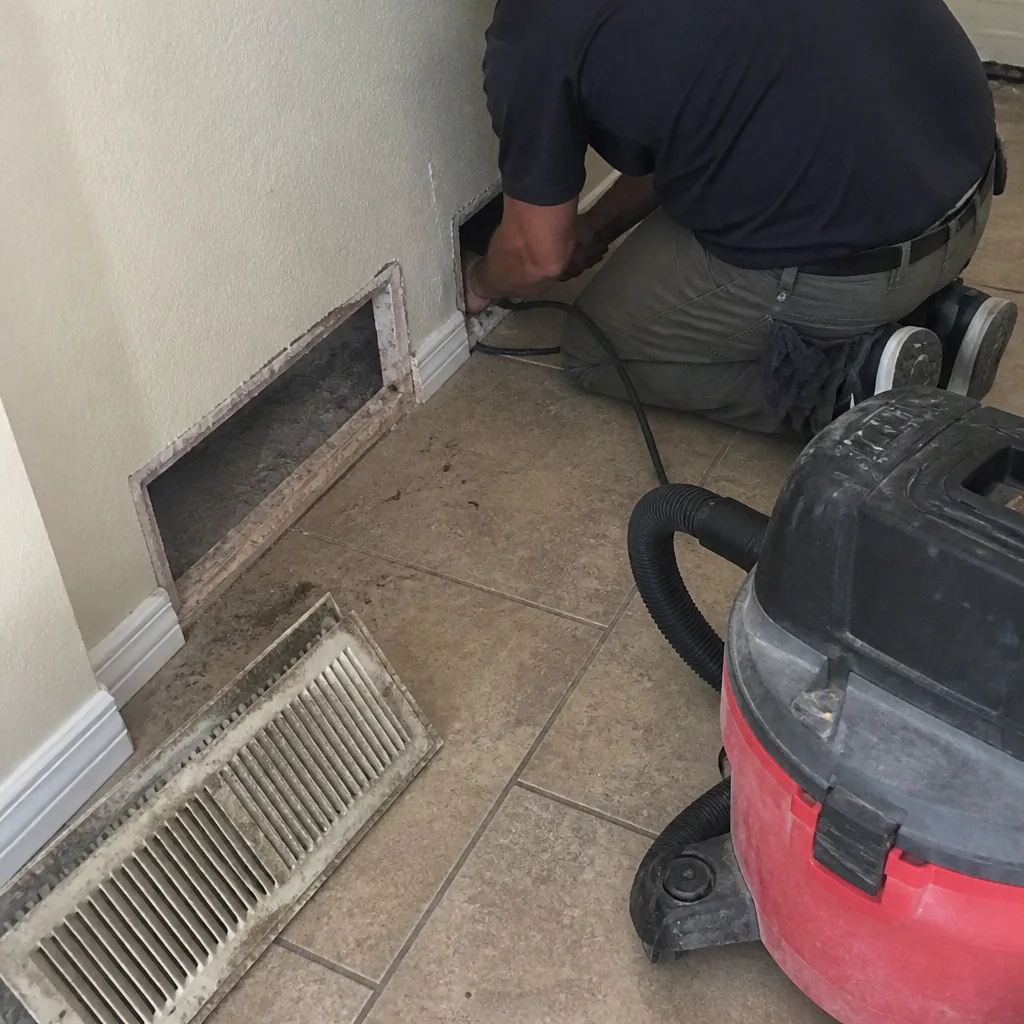 Before
 After
After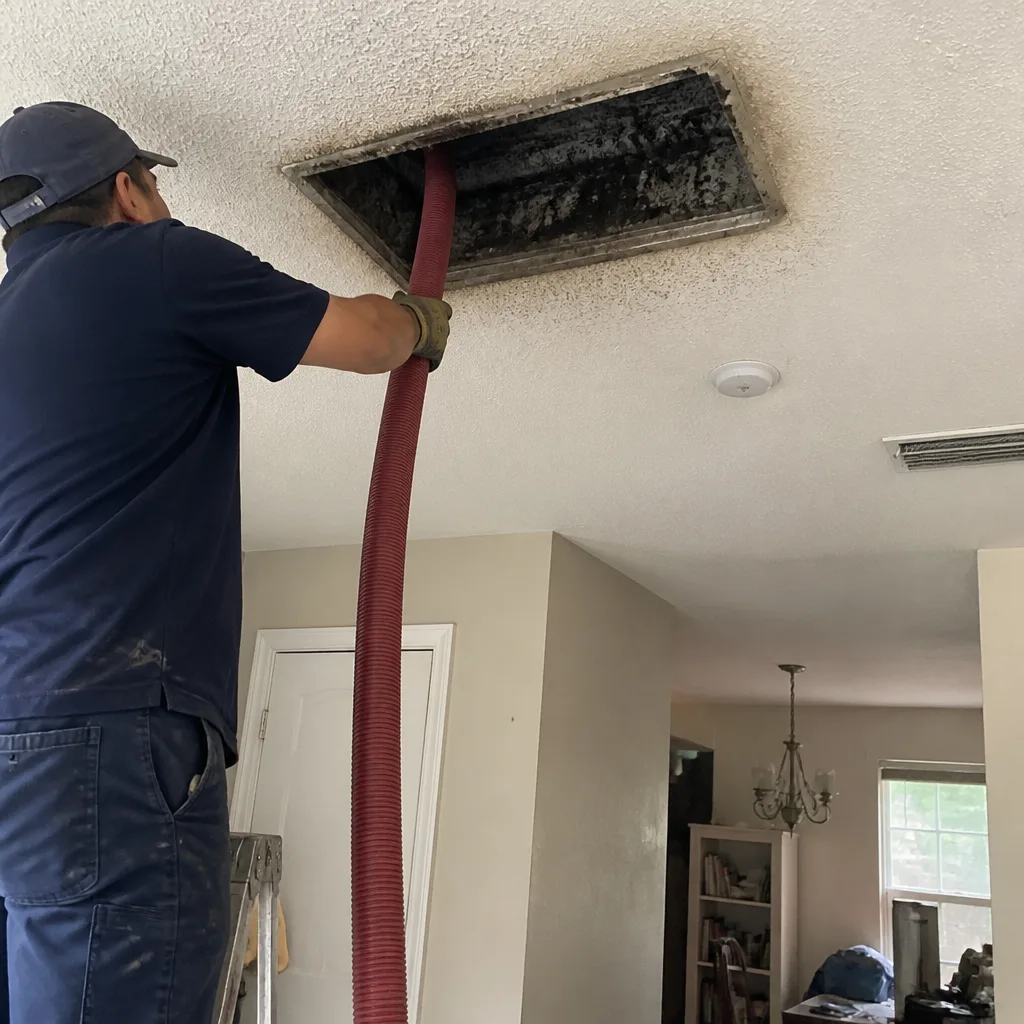 Before
 After
After